2A Battle Gets Dirty – Gun Rights Expert Exposes Democrats’ Sneaky Tactics
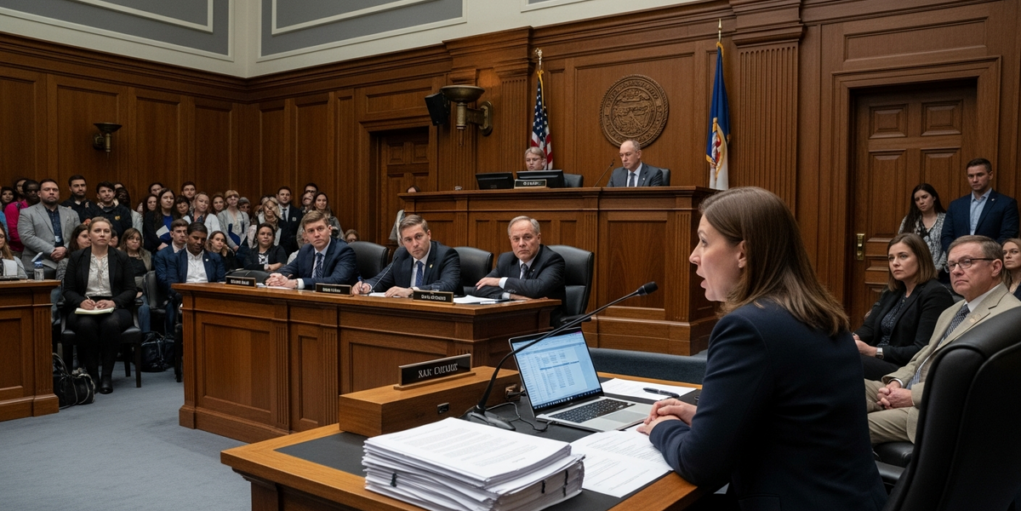
There’s a playbook that gun control advocates have been running since long before anyone reading this was born. It goes like this: wait for a tragedy, rush legislation to the floor, fill the hearing with emotional testimony, and do everything possible to prevent anyone with actual policy expertise from explaining why the bill won’t work.
Minnesota Democrats just ran that playbook to perfection. Almost.
The Setup
Last year’s shooting at Annunciation Catholic Church in Minneapolis was horrific. Two children killed. More than two dozen injured. The shooter later died by suicide. No decent person watches something like that and doesn’t feel the weight of it.
Governor Tim Walz responded with a sweeping gun control package — two bills that would broadly ban future sales of many semiautomatic firearms by redefining them under state law and prohibit magazines holding more than ten rounds. The bills were framed as a direct response to the tragedy, and the hearing was staged accordingly.
Parents of victims testified. Survivors testified. The room was heavy with grief, and understandably so. Nobody with a soul dismisses what those families went through.
But grief is not policy. And the Democrats running that hearing knew the difference — which is exactly why they tried to make sure nobody else got to explain it.
The Expert They Didn’t Want
Amy Swearer is a senior legal fellow at Advancing American Freedom who specializes in gun policy. She’s not a lobbyist. She’s not a talking head. She’s a legal scholar who has spent her career analyzing firearms legislation and its real-world effects. She was invited to testify by the Minnesota Gun Owners Caucus.
The committee rejected her written testimony. The stated reason? It contained hyperlinks, which supposedly violated committee rules. Swearer says Democrats selectively enforced that rule against her while letting other written submissions with similar formatting through without objection.
When she pushed to testify in person, the committee resisted. It was only after the Minnesota Gun Owners Caucus publicly called out the exclusion that Democrats relented — and gave her two minutes.
Two minutes. For a nationally recognized expert. On two bills that would fundamentally reshape gun rights in the state. At a hearing that lasted hours and featured extensive emotional testimony from supporters of the legislation.
The National Foundation for Gun Rights said its executive director, Hannah Hill, was told she couldn’t testify at all.
What They Didn’t Want You to Hear
Swearer’s central argument was simple and devastating: these policies would not have prevented a single death at Annunciation.
That’s the sentence Democrats couldn’t afford to have in the hearing transcript. Because once you admit that the legislation being proposed wouldn’t have stopped the tragedy being invoked to justify it, the entire emotional framework collapses. You’re left with what the bills actually are — sweeping restrictions on constitutionally protected rights that fail their own stated purpose.
Swearer called the first bill “one of the most restrictive gun bans I have ever seen in terms of the definition.” She said both bills are unconstitutional. She came prepared with an analysis of multi-victim shootings in Minnesota that would have provided the policy context the hearing desperately needed.
Democrats didn’t want policy context. They wanted tears. Not because they don’t care about the victims — most of them probably do — but because tears pass bills and data kills them.
The 10-10 Tie
Despite the stacked hearing, despite the emotional testimony, despite the attempted exclusion of opposing experts, the bills stalled. The committee voted 10-10 along party lines. Dead tie. No advancement.
That result tells you something important. Even in a committee structured to favor passage, even with the emotional weight of a church shooting behind them, even with experts sidelined and the deck stacked, Democrats couldn’t get a single Republican to cross the aisle.
Because the policy doesn’t hold up. Strip away the emotion and what you have are two bills that redefine commonly owned firearms as banned weapons, restrict magazine capacity below the standard configuration of most handguns sold in America, and wouldn’t have changed the outcome of the tragedy they’re named after.
Republicans on that committee knew it. The two-minute window Swearer got was enough to plant the seed. And the tie vote proved the harvest.
The Walz Connection
These bills carry Tim Walz’s fingerprints. The same Tim Walz who ran for vice president as a gun-owning moderate who understood rural America. The same Walz who told the country he went pheasant hunting and respected the Second Amendment.
Now he’s pushing one of the most aggressive gun ban packages in the country, using a church shooting to justify legislation that his own policy team knows wouldn’t have prevented it. The “moderate hunter” persona was always a costume, and Minnesota is seeing what’s underneath — a governor who’ll exploit a tragedy to advance a legislative agenda that has nothing to do with preventing the next one.
The Pattern That Never Changes
This is how it always works. A tragedy occurs. Politicians rush to the microphone. Bills are drafted before the funerals are finished. Hearings are stacked with emotional testimony. Experts are blocked, limited, or drowned out. And anyone who raises a policy objection is accused of not caring about dead children.
It’s manipulation dressed as compassion. And it works — until someone like Amy Swearer gets two minutes at the microphone and explains that the emperor has no clothes.
Swearer said it clearly: “They did not want this to turn into a battle of actual experts on policy.”
No, they didn’t. Because a battle of experts is a battle they lose. Every time. On every bill. In every state where someone with data gets to stand next to someone with tears and explain that feelings don’t make functional law.
The hearing is over. The bills are stalled. And somewhere in Minnesota, a policy expert who was given 120 seconds to speak said more than the entire hearing’s worth of emotion could accomplish.
Two minutes was all she needed. Imagine what would have happened if they’d given her ten.