Did Israel Force Trump’s Hand? He Responds With This
There’s a narrative the media has been building since the first bombs dropped on Iran. You’ve heard it on every cable news panel and in every think piece from people who’ve never made a hard decision in their lives: Israel dragged America into this war.
It’s clean. It’s simple. It lets critics avoid the uncomfortable reality that Trump made the call, the intelligence supported it, and waiting would have gotten Americans killed.
On Tuesday, Trump torched that narrative in about thirty seconds.
The Quote
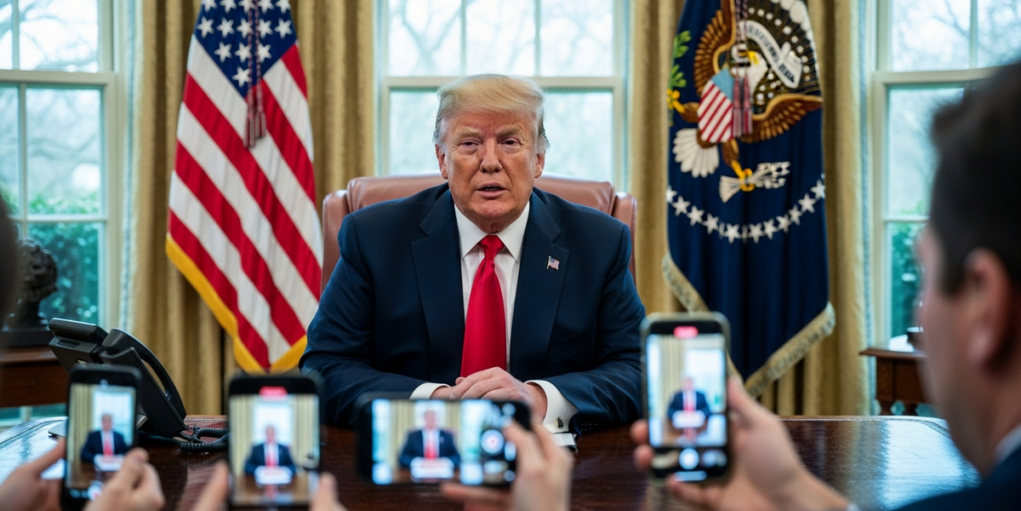
A reporter asked him directly: “Did Israel force your hand to launch these strikes against Iran? Did that get the United States into this war?”
Trump didn’t hedge. Didn’t qualify. Didn’t launch into a five-minute preamble about the complexity of Middle Eastern geopolitics.
“No. I might have forced their hand.”
Then he explained. Negotiations with Tehran were going nowhere. His intelligence team — people he described as lifelong professionals who do this for a living — assessed that Iran was preparing to strike first. Not theoretically. Not eventually. Imminently.
“Based on the way the negotiations were going, I think they were going to attack first, and I didn’t want that to happen.”
That’s not a president being led. That’s a president leading — reading the intelligence, making the call, and bringing Israel along for a joint operation rather than waiting for body bags to force his hand.
The Rubio Briefing
The day before Trump’s statement, Secretary of State Marco Rubio walked into Congress and laid out the intelligence picture that made the decision unavoidable.
Iran had already delegated launch authority to field commanders. That’s not a defensive posture. That’s a gun cocked and pointed at American bases across the Middle East. Within an hour of the initial strike on the leadership compound, missile forces in both northern and southern Iran had been activated. They weren’t being prepped — they’d already been prepositioned for launch.
Rubio’s assessment was blunt: “If we stood and waited for that attack to come first before we hit them, we would suffer much higher casualties.”
That’s the calculation. Wait for Iran to shoot first and absorb the dead Americans, or act preemptively and eliminate the threat before it launches. Trump chose option two. Any commander in chief with access to that intelligence and a functioning conscience would have done the same.
The Narrative They Need
The “Israel dragged us in” story isn’t about facts. It’s about politics.
If Israel forced Trump’s hand, then the war is Netanyahu’s fault and Trump is a puppet — weak, reactive, controlled by a foreign ally. That version lets Democrats attack the war without attacking the intelligence. It lets the media frame Trump as reckless without admitting the alternative was worse. It lets Kamala Harris criticize from the cheap seats without explaining what she would have done differently.
But Trump’s statement — backed by Rubio’s classified briefing to Congress — demolishes every piece of that frame.
Trump initiated. Trump assessed the intelligence. Trump decided that waiting was more dangerous than acting. Trump told Israel he was ready. The operation was joint, but the decision was American.
“If anything, I might have forced Israel’s hand. But Israel was ready, and we were ready, and we’ve had a very, very powerful impact.”
That’s not a president who got pushed into something. That’s a president who pushed forward and brought his ally with him.
The Preemption Debate
Critics will argue that preemptive strikes set a dangerous precedent. They’ll invoke Iraq and WMDs and every historical example of intelligence that turned out to be wrong. And those concerns aren’t inherently unreasonable — preemption carries risk, and the burden of proof should be high.
But this isn’t Iraq. Iran’s missile program wasn’t hypothetical. Their launch authority delegation wasn’t speculative. Their forces were positioned, activated, and ready. Rubio told Congress the intelligence was clear: the attack was coming.
The question isn’t whether preemption is always justified. The question is whether it was justified here — against a regime that had openly promised to attack, had delegated the authority to do so, and had moved the weapons into position.
The intelligence said yes. Trump said yes. And the alternative — absorbing a first strike on American bases, with American casualties, to preserve the moral purity of responding only after being hit — would have been strategic malpractice.
What the Left Can’t Admit
Here’s the part that makes this so painful for Trump’s critics. The operation worked. The leadership was hit. The missile infrastructure was degraded. The regime is reeling. And the decision that made it all possible came from the man they’ve spent nine years calling reckless, dangerous, and unfit for command.
Trump read the intelligence. He consulted his team. He coordinated with an ally. He acted decisively. And the result was the elimination of the most dangerous terror-sponsoring regime in the Middle East.
That’s not reckless. That’s exactly what a commander in chief is supposed to do. And the fact that he did it before the enemy could act first — saving American lives in the process — is the kind of decision that gets studied at war colleges for generations.
But acknowledging that means acknowledging Trump was right. And for a certain segment of the political and media establishment, that’s a sentence they’d rather choke on than speak.
The Bottom Line
Israel didn’t drag America into this. Iran’s own behavior — the nuclear ambitions, the terrorism funding, the launch preparations, the delegated authority to field commanders — created the conditions where action became inevitable.
Trump recognized it first. He made the call. He brought Israel in as a partner, not a puppeteer. And he did it with intelligence that Rubio presented to Congress and nobody on either side of the aisle has disputed.
“I might have forced their hand.”
Five words that tell you who was in charge, who made the decision, and who owns the outcome — good and bad.
Trump’s willing to own it. His critics aren’t willing to admit it. And the intelligence that justified everything is sitting in a classified briefing that every member of Congress has now seen.
The narrative is dead. The truth is simpler and harder to argue with: the President of the United States saw a threat, made a decision, and acted before American soldiers paid the price for waiting.
That’s not being dragged. That’s leading.