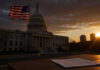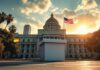

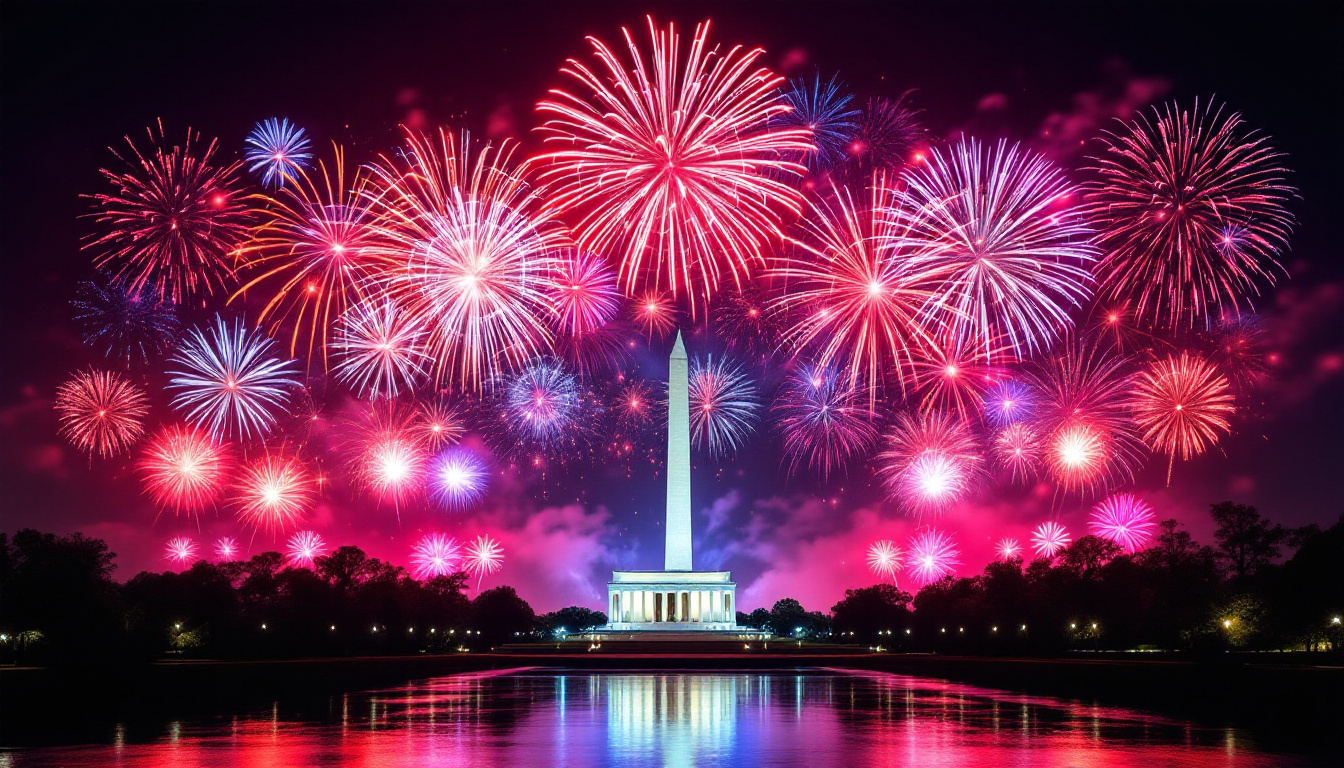
On Friday night, approximately 851,000 fireworks launched from ten firing sites across Washington, D.C. — the Lincoln Memorial Reflecting Pool, barges along the Potomac River, West Potomac Park — lighting up the sky for 38 straight minutes. The previous Guinness World Record, set by the Philippine-based Iglesia Ni Cristo on New Year's Day 2016 in Bocaue, Bulacan, stood at 810,904.
It took them over an hour. We did it in 38 minutes.
The Freedom 250 commission organized what it called the largest fireworks display in human history as the centerpiece of the America 250 celebration, and the numbers back it up. Last year, the standard Fourth of July display on the National Mall fired roughly 7,000 shells during a 17-minute show. This year's show represented a 120-fold increase — launching from ten separate locations simultaneously to create a display visible across the entire capital.
President Donald Trump delivered a 37-minute address before the show began, telling the crowd, "No dream in history is bigger or more incredible than the one that started on July 4, 1776." He added, "At 250 years old, we may be the oldest constitutional republic on Earth, but our country is just getting started."
The evening wasn't without drama. Severe thunderstorms rolled through the D.C. area just as the Freedom 250 celebration was set to begin, forcing the Secret Service to evacuate the National Mall. An estimated 375,000 people had gathered before the weather hit. About 150,000 stayed through the delay, waited out the lightning, and got every last one of those 851,000 shells.
Trump, speaking to the rain-soaked crowd that stuck it out, declared, "America is a nation of winners, and today our country is winning again." He took a shot at the political left for good measure: "All these talks from the communists, they haven't got a chance — not even a chance."
Now, in the days leading up to the display, Politico ran a piece warning that Trump's fireworks "could shower the city with pollution." Reporters Alex Guillen, Miranda Willson, and Ariel Wittenberg cited internal National Park Service documents recommending that spectators "avoid prolonged exposure" to fine particulate matter and even wear N95 masks "when outdoors." The article noted that fireworks displays increase pollution by 42 percent on average across 315 monitoring sites and that particulate matter stays elevated for about 24 hours. There was genuine concern expressed about ospreys during breeding season.
Ospreys.
The Gateway Pundit's Jim Hoft reported on the confirmed record, and NewsBusters' P.J. Gladnick catalogued the media's pre-show panic in a piece headlined around Politico's hand-wringing. The environmental objections ranged from heavy metals used for "vibrant colors" to the potential impact of perchlorates on "amphibians and juvenile fish" in the Potomac. An organizer with Moms Clean Air Force, identified only as Schmitz, noted she has asthma. A University of Mary Washington associate professor named Tyler Frankel weighed in on the particulate science.
All perfectly reasonable concerns in isolation. The trouble is that nobody ran these stories when the Philippines launched 810,904 fireworks over Bocaue in 2016. Nobody demanded N95 masks for New Year's revelers in Bulacan. The environmental alarm materialized the moment the display became associated with Trump and the 250th anniversary of American independence.
The broader pattern is familiar by now. Any large-scale demonstration of national pride — a military flyover, a parade, a record-setting fireworks display — generates a wave of concern pieces about pollution, cost, or disruption. The concerns are always framed as apolitical. The timing never is.
Meanwhile, 150,000 Americans who refused to leave a thunderstorm watched their country break a world record. Trump closed his speech with six words: "This is only the dawn."
The Philippines held that record for ten years. It lasted about as long as the media's credibility on fireworks pollution.