

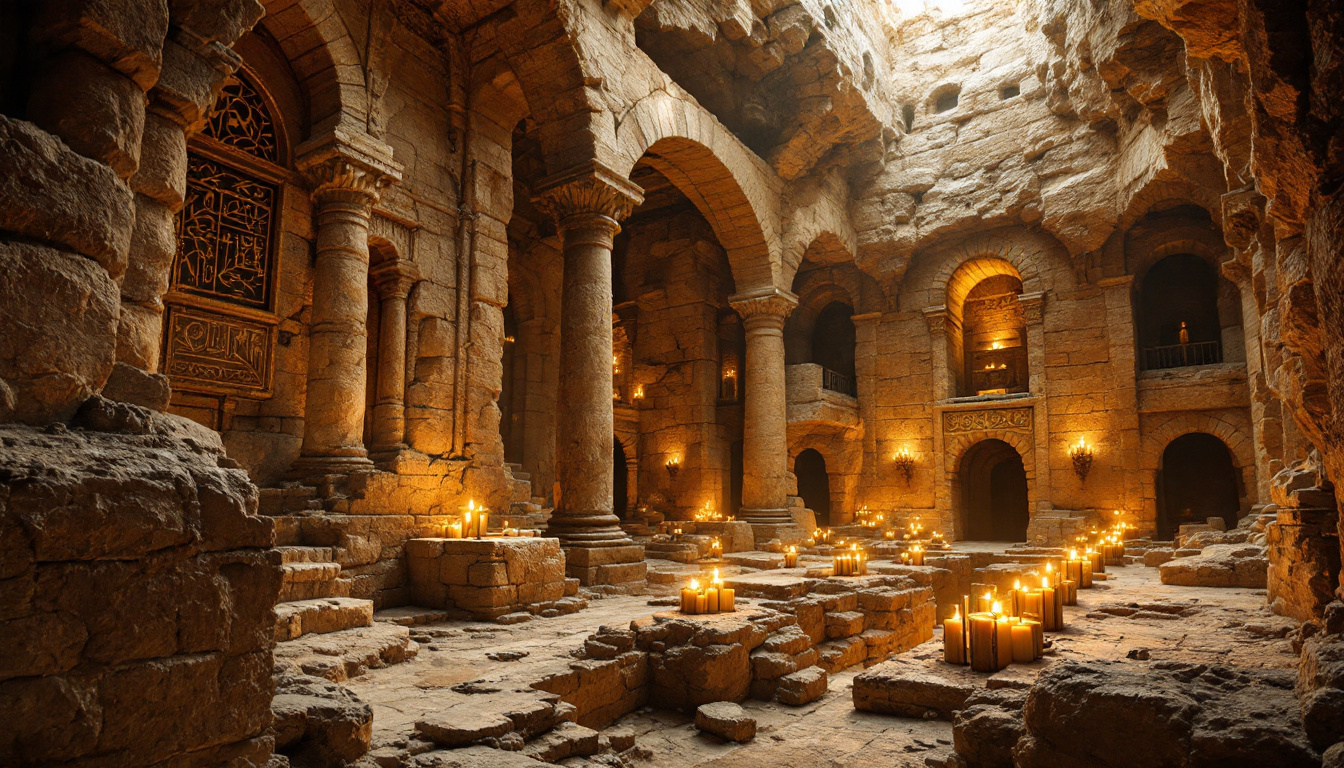
Nearly 20 feet beneath the floor of the Church of the Holy Sepulchre in Jerusalem, archaeologists pulled olive pits, grape seeds, and ancient pollen out of the dirt. A garden. Exactly where the Gospel of John said there would be one.
They've been digging since 2022. Four years of careful excavation under one of the most sacred sites in Christianity. And what Francesca Romana Stasolla and her team from Rome's Sapienza University found wasn't a contradiction or a complication. It was a confirmation.
The results, published in the archaeological journal Liber Annuus, describe a site that matches the biblical account with striking specificity. John 19:41 says the tomb where Jesus was buried sat in a garden near the place of crucifixion — a new tomb, never used before, carved from rock. Matthew, Mark, and Luke all describe a rock-cut tomb. Hebrews 13:12 places it outside the city gate.
John didn't mention the garden as scenery. He mentioned it because it mattered: the Sabbath was hours away, and a burial had to happen before sundown. The tomb was close. That's why they used it. That's the detail John recorded under time pressure two thousand years ago — and it's the detail the archaeology just confirmed.
What Stasolla's team uncovered beneath the church floor was a garden, a burial ground, and a rocky quarry — just outside the old city walls. The olive pits and grape seeds establish cultivation. The quarry establishes the kind of rocky terrain where a tomb could be hewn from stone. The location checks every box the Gospel writers laid out nearly two thousand years ago.
Stasolla was careful with her language. She said her findings don't definitively prove this is where Jesus was buried, but that early Christians' decision to preserve this specific tomb "hints that the memory of where Jesus was buried might have survived the centuries."
"Archaeology undoubtedly attests to the enduring nature of this commemorative tradition," she added.
That's the restrained academic version of saying the tradition wasn't invented — it was inherited.
The site's history adds another layer. In the fourth century, Emperor Constantine's builders deliberately demolished a Roman structure that Emperor Hadrian had erected over the location — a pagan temple apparently built to bury the site's significance. Constantine replaced it with an open-air rotunda ringed by a dozen columns, enshrining the tomb. The fact that Hadrian went out of his way to build over it suggests even Rome knew the site mattered to early Christians.
Some scholars have argued for the so-called Garden Tomb as the actual burial location. But the Garden Tomb doesn't have four years of stratigraphic excavation producing botanical evidence consistent with first-century cultivation. The Church of the Holy Sepulchre does.
There's a particular strain of modern thinking that treats faith and evidence as opposites — that believing something on faith means the evidence must not exist, and finding evidence means faith was unnecessary. This dig doesn't play that game. The evidence was always under the floor. Believers showed up anyway, for seventeen centuries, and stood directly above it.
What makes the story land isn't just that the archaeology matches the text. It's that the archaeology matches the text at the exact location where an unbroken line of Christian worship stretches back to the Roman Empire.
Four years of digging. Nearly 20 feet of earth. Olive pits and grape seeds in the exact spot Scripture described a garden.
Sometimes the ground just agrees with the book.