

Around thirteen Catholic nuns — women who have devoted their entire lives to caring for the sick and dying — just marched into federal court and sued the State of New York. Their target: a law that forces them to present assisted suicide as an option to their most vulnerable patients, regardless of whether those patients ever asked about it.
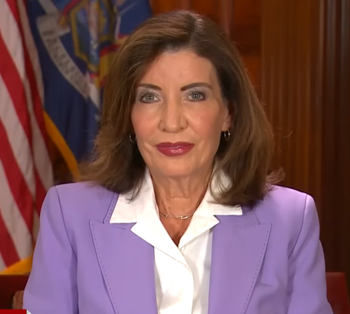
Kathy Hochul picked a fight with nuns. Actual, habit-wearing, vow-of-poverty, heal-the-sick nuns.
The lawsuit, Dominican Sisters of Hawthorne v. New York State, was filed on July 20 and challenges what the plaintiffs call a "culture of death" mandate embedded in the state's Palliative Care Information Act. The law requires healthcare providers — including religious orders that run hospice and end-of-life care facilities — to inform terminally ill patients about assisted suicide options. Refuse, and you face crushing fines and professional consequences. The case is being handled by Becket, the legal powerhouse that successfully defended the Little Sisters of the Poor at the Supreme Court.
Mark Rienzi, president of Becket, didn't mince words about what New York is doing. "New York is forcing sick and dying people to consider suicide at their lowest moment, regardless of whether they ask for it or not," Rienzi said. He went further: "Worse, it's conscripting the nuns who care for them into its suicide cult on pain of crushing fines and professional ruin. That is both unconscionable and unconstitutional."
Suicide cult. That's the legal team's characterization, and it's hard to argue with the framing.
The plaintiffs include the Dominican Sisters of Hawthorne, Carmelite Sisters, Benedictine Sisters, and the Little Sisters of the Poor, along with Bishop John O. Barres of the Diocese of Rockville Centre. Mother Marie Edward of the Dominican Sisters of Hawthorne explained the religious conviction driving the case: "Everyone is made in the image and likeness of God, and there is a dignity about the human person. We are only the guardians of this body. We do not take the charge of whether or not we live or we die. That's up to God."
These aren't political operatives or culture-war mercenaries. These are women who hold the hands of dying people. They sit with them through the worst hours of their lives. And Albany decided those women need to be deputized into promoting suicide — or else.
This case fits into a broader pattern of blue-state governments treating religious exemptions as obstacles rather than constitutional rights. Bari Weiss, founder of The Free Press and former New York Times writer, has documented this trend extensively — the slow bureaucratic squeeze on faith-based institutions that don't conform to the reigning moral framework in Albany, Sacramento, and Springfield.
The Dominican Sisters of Hawthorne have been caring for incurable cancer patients since 1900. They don't charge for their services. They take no government funding. They just show up and take care of people who are dying.
New York looked at that and decided the problem was insufficient paperwork about ending it faster.