

Nidal Hasan is scheduled to be executed in early December for murdering 13 people and wounding 30 more at Fort Hood in 2009. He opened fire on unarmed soldiers in a processing center, shouting "Allahu Akbar" as he pulled the trigger. Police ended the massacre by shooting him, which left him paralyzed from the waist down.
Rep. Mikie Sherrill, a New Jersey Democrat, thinks that last detail is the one America should focus on.
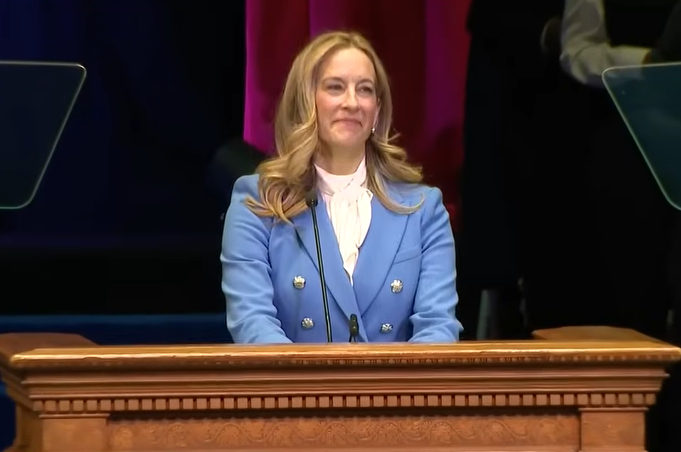
Sherrill, who leans on her background as a former federal prosecutor and Navy helicopter pilot, went public with her opposition to the execution — and her reasoning landed with the subtlety of a bag of hammers. "Imagine the 20-year-old, maybe the 18-year-old that stepped up to serve," Sherrill said. "You're going to go shoot this guy who's in a wheelchair."
That's her objection. Not that the death penalty is wrong. Not that the legal process was flawed. She's worried the firing squad will feel bad because the man who slaughtered their fellow soldiers happens to be sitting down.
Hasan is in a wheelchair because responding officers stopped him from killing more people. The paralysis is a direct consequence of his attack. Sherrill has repackaged that consequence as a reason for sympathy — not for the victims, but for the terrorist.
She went further, calling the scheduled execution "pageantry" and declaring it "disrespectful to soldiers" and "incredibly offensive to most of us who've served." The families of the 13 dead service members were not quoted agreeing with that characterization.
Sherrill's framing rests on the idea that young troops ordered to carry out the sentence would be emotionally scarred by executing a man in a wheelchair. The troops who watched their friends bleed out on a medical processing center floor in 2009 — their emotional scars apparently factor in differently.
This is the same attack the Obama administration originally classified as "workplace violence" rather than terrorism. It took years and an act of Congress to get the victims recognized as casualties of a terror attack so their families could receive Purple Hearts and the benefits that come with them. The bureaucratic impulse to minimize what Hasan did has a long institutional history. Sherrill is just the latest chapter.
She says she supports justice. She cites her prosecutorial background as proof. But the justice she's describing is one where a convicted mass murderer's disability — a disability caused by his own attack — outweighs the verdict a military court delivered. Thirteen counts of premeditated murder. Thirty-two counts of attempted premeditated murder. A unanimous death sentence.
The execution is set for early December. Hasan has been on death row for over a decade. The families have waited seventeen years.
Mikie Sherrill looked at all of that and saw a wheelchair.