

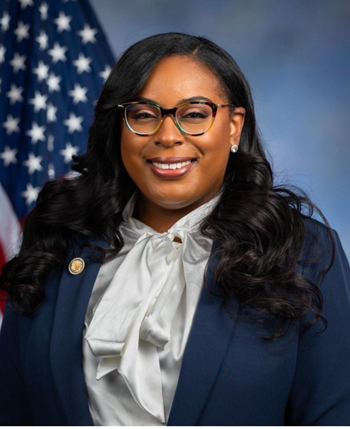
New Jersey Democratic Representative LaMonica McIver faces a three-count federal indictment for allegedly shoving past and forcibly striking an ICE officer at the Delaney Hall detention facility on May 9, 2025. The charges carry a combined statutory maximum of 17 years in prison.
Her defense? She's a congresswoman, so it doesn't count.
The Third Circuit federal court disagreed. On August 26, the appeals court rejected McIver's claim of legislative immunity, ruling that physically assaulting a federal law enforcement officer does not fall under the protections afforded to members of Congress for their legislative activities. The case, first brought by a federal grand jury in June 2025, will now proceed toward trial.
The indictment lays out three counts: two charges of forcibly assaulting, impeding, intimidating, and interfering with ICE and Homeland Security investigators — each carrying up to 8 years in prison plus fines — and one count of simple assault carrying up to 1 year. That's 17 years of potential prison time, excluding fines, for a sitting member of Congress who apparently believed her title doubled as a shield.
The legislative immunity argument is worth examining on its own, because it tells you everything about the mindset. McIver's legal team argued that her actions at the ICE facility occurred in her official capacity as a representative. As in: showing up to an immigration enforcement operation and allegedly putting hands on federal agents is just part of the job description.
Law professor Jonathan Turley noted that the court found the acts charged — pushing past and forcibly striking someone — were "unambiguously" outside the scope of legislative immunity. That's legal language for "not even close." The Speech or Debate Clause protects votes, speeches, and committee work. It does not protect you from catching a federal charge because you decided to body-check an ICE officer, as reported by American Wire News.
Left-wing legal advocates will frame this as criminalizing congressional oversight. Which is an interesting way to describe a case where the defendant is accused of striking a federal officer. Oversight involves subpoenas and hearings. It does not involve fists.
The immunity claim also reveals a quiet assumption that runs through a certain class of elected officials: that the rules are different for them. Not different in the way that all elected officials enjoy certain procedural protections — different in the way that means consequences are for other people. McIver didn't just break the law, according to the indictment. She then argued the law shouldn't apply to her at all.
The Third Circuit said otherwise. The charges stand. The trial moves forward.
Sixteen years and change of potential prison time is a lot to risk on the theory that Congress members operate above federal law. Turns out the judiciary still knows the difference between legislative activity and assault.