
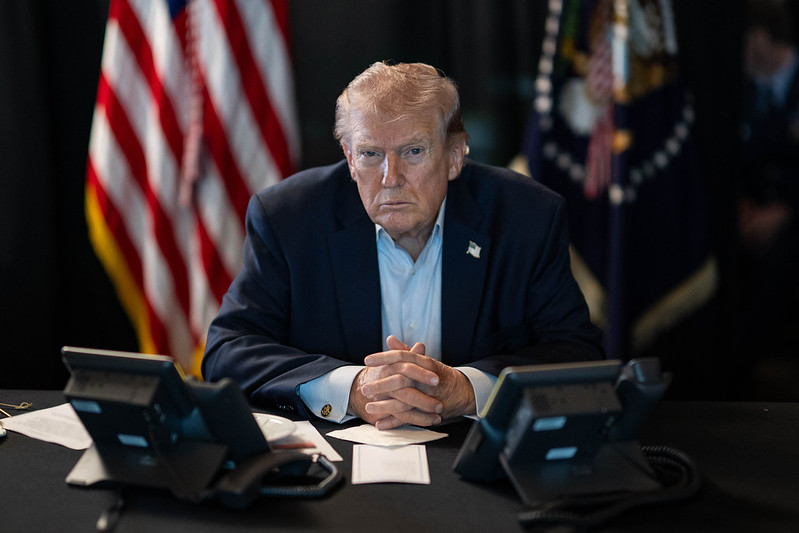
On May 16, 2017 — exactly one week after President Trump fired FBI Director James Comey — the bureau quietly opened a full criminal investigation codenamed Oxferd Comma. The target was the sitting President of the United States. The theory: Trump fired Comey because Russia told him to.
The investigation ran for nearly two years. It produced no charges. And the FBI's own agents were laughing about it internally the entire time.
The existence of Oxferd Comma was revealed through newly declassified memos released on July 30, 2026. The opening document, signed by FBI General Counsel James Baker and counterintelligence chief William Priestap, stated the goal was "to determine if President Trump is or was" acting as a Russian asset. The memo offered what it called "an articulable factual basis" for the probe — but what followed tells a very different story.
Three days after the investigation opened, on May 19, 2017, lead investigator Pete Strzok — the same agent who ran the Crossfire Hurricane probe — texted FBI lawyer Lisa Page with a remarkable admission. "I hesitate in part because of my gut sense and concern there's no big there there," Strzok wrote. The man running the investigation didn't believe in it before the ink was dry.
He wasn't alone. Special Agent William Barnett, who worked the case, told investigators he "still did not see any evidence of collusion between the Trump Campaign" and Russia. Barnett and fellow agents reportedly joked internally about how the collusion theory could be spun into something — a detail that ended up memorialized in his FBI interview summary.
The Oxferd Comma probe ran from May 16, 2017 until April 9, 2019. Nearly two years of federal resources spent investigating whether the President of the United States was a foreign agent — while the agents doing the investigating privately acknowledged they had nothing.
Some will point out that Robert Mueller's special counsel investigation ran concurrently, as if that lends credibility. It doesn't. Mueller's probe grew directly out of the same Crossfire Hurricane theory that John Durham's special counsel investigation later concluded "lacked factual basis." Durham's 2023 report, released under the Biden Justice Department, traced the collusion narrative back to Hillary Clinton's campaign and a dossier compiled by former British spy Christopher Steele, whose primary source, Igor Danchenko, the FBI itself determined was unreliable after interviewing him in February 2017.
The timeline is worth sitting with. CIA Director John Brennan briefed President Barack Obama on August 3, 2016, about intelligence suggesting the Clinton campaign had approved a plan to tie Trump to Russia. Brennan's own notes from the briefing were declassified years later. The FBI knew the sourcing was garbage. They opened investigations anyway. And when President Trump exercised his constitutional authority to fire the FBI Director, they used that lawful act as the predicate for yet another probe.
Acting FBI Director Andrew McCabe and Deputy Attorney General Rod Rosenstein presided over the launch of Oxferd Comma. Within days, Mueller was appointed special counsel. The machinery was already in motion before anyone outside the building knew.
The declassified documents — the Oxferd Comma opening EC, the closing communication, the Strzok-Page texts, the Barnett interview, the Priestap notes — paint a picture that no amount of "but Russia" can wallpaper over. The FBI investigated a president trying desperately to provide evidence for the left's Russia, Russia, Russia! narrative. They investigated him not once, not twice, but three times (that we know of) to try to pin anything on him and get him out of office.
And no one did anything to stop the FBI's topo brass from doing it. Not even the agents involved in any of the investigations who were all privately telling each other the investigations were wild goose chases.
When the people running the investigation don't believe in it, and the people who started it won't say why, the word "investigation" stops meaning what it's supposed to mean.