

The French UN mission in Geneva posted to X that the United States "used to be a beacon of human rights. Not anymore." They tagged it #AmericaAlone. They thought they were landing a punch.
In reality they were starting a fight they couldn't finish.
U.S. Ambassador Mike Waltz responded within hours. "It is disappointing, though not surprising, that this is how France deflects on its shameful vote to coddle some of the worst human rights abusers," Waltz wrote. He added that "France voted for someone who has been lecturing free, sovereign democracies like the United States, the UK, and Israel."
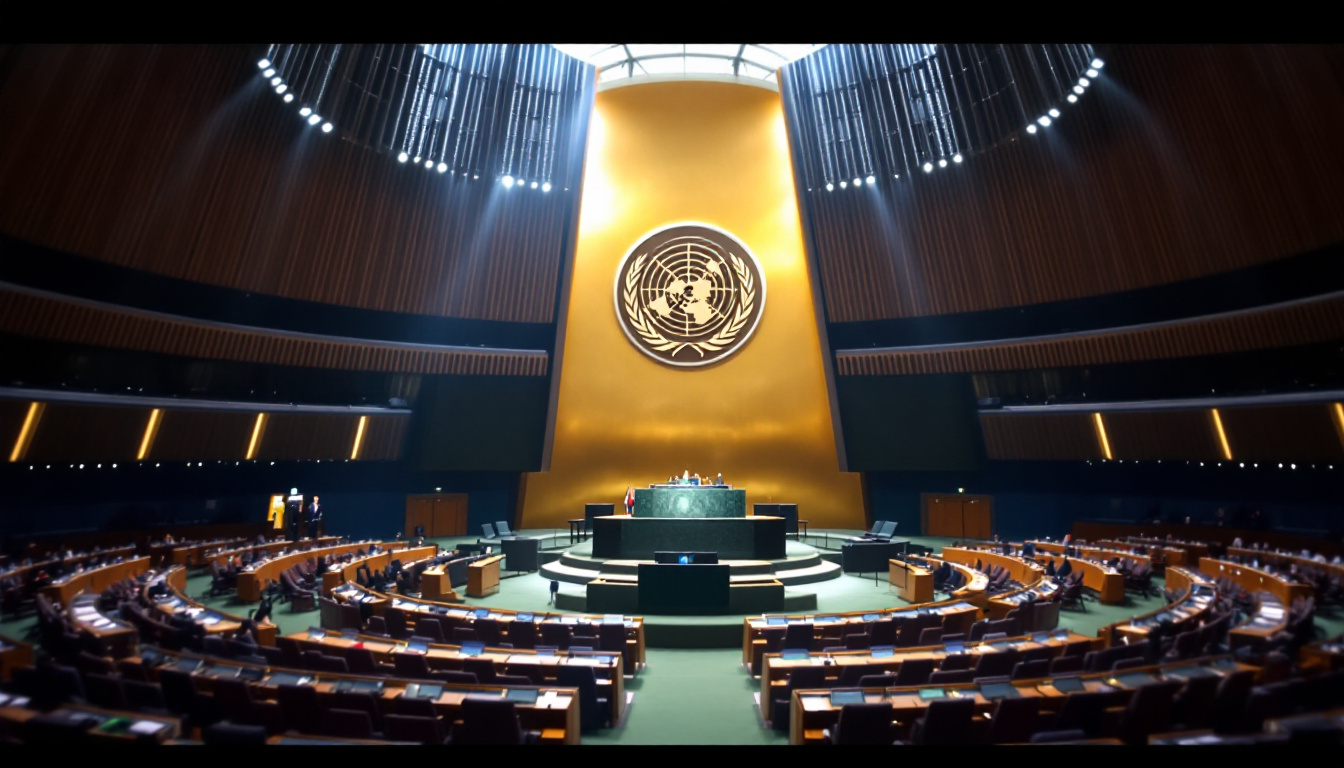
The someone in question is Volker Türk, the UN High Commissioner for Human Rights, who the General Assembly just voted to reappoint for a four-year term running from October 12, 2026 through October 11, 2030. The vote was 144 in favor, 10 against, and 13 abstentions. The United States voted no. So did Russia, North Korea, Nicaragua, and Mali — a lineup that France's UN Ambassador Jérôme Bonnafont apparently found hilarious rather than instructive.
Bonnafont praised Türk as "a voice of conscience, confronting states with reality and their responsibilities" and lauded his "rigor and impartiality." Ireland's UN Ambassador Fergal Mythen, speaking for the EU, said Türk had "demonstrably fulfilled responsibilities entrusted to him effectively and with integrity."
A UN Watch study covering 2022 through 2024 found that Türk criticized the United States more frequently than China, North Korea, Cuba, Saudi Arabia, and Qatar combined. His office issued zero self-initiated criticisms of Cuba, North Korea, Algeria, Eritrea, Mauritania, Lebanon, or Qatar during that period. The man lectures democracies while giving actual dictatorships a pass, and France calls that impartial.
Jeff Bartos, the U.S. representative for UN management and reform, didn't mince words during the session. "Mr. Türk has guided it to its deathbed," Bartos said of the human rights apparatus. "And if you vote to reappoint Volker Türk for a four-year term, it will kick the bucket." He followed with a warning: "Make no mistake, if this assembly tolerates procedural overreach, backroom deals and the misuse of U.N. posts, there will be consequences."
Nile Gardiner, Director of the Margaret Thatcher Center for Freedom at the Heritage Foundation, offered the historical context France probably didn't want raised. "Perhaps show some gratitude instead?" Gardiner wrote. "The French owe their very existence as a sovereign nation to the United States."
France's framing — that America is "isolated" because 144 countries voted the other way — assumes the majority is automatically right. Which is an interesting principle for a country that spent most of the 20th century on the wrong side of its own colonial history to invoke. The 144 nations that voted to keep Türk include a healthy roster of authoritarian states with obvious reasons to want a human rights commissioner who looks the other way. Calling that coalition "the world" requires ignoring what most of those governments actually do to their own citizens.
Türk becomes the first UN human rights chief to serve two complete four-year terms since the position was created in 1993. The office was originally designed to hold abusive governments accountable. It now spends more energy scolding the democracies that fund it.