
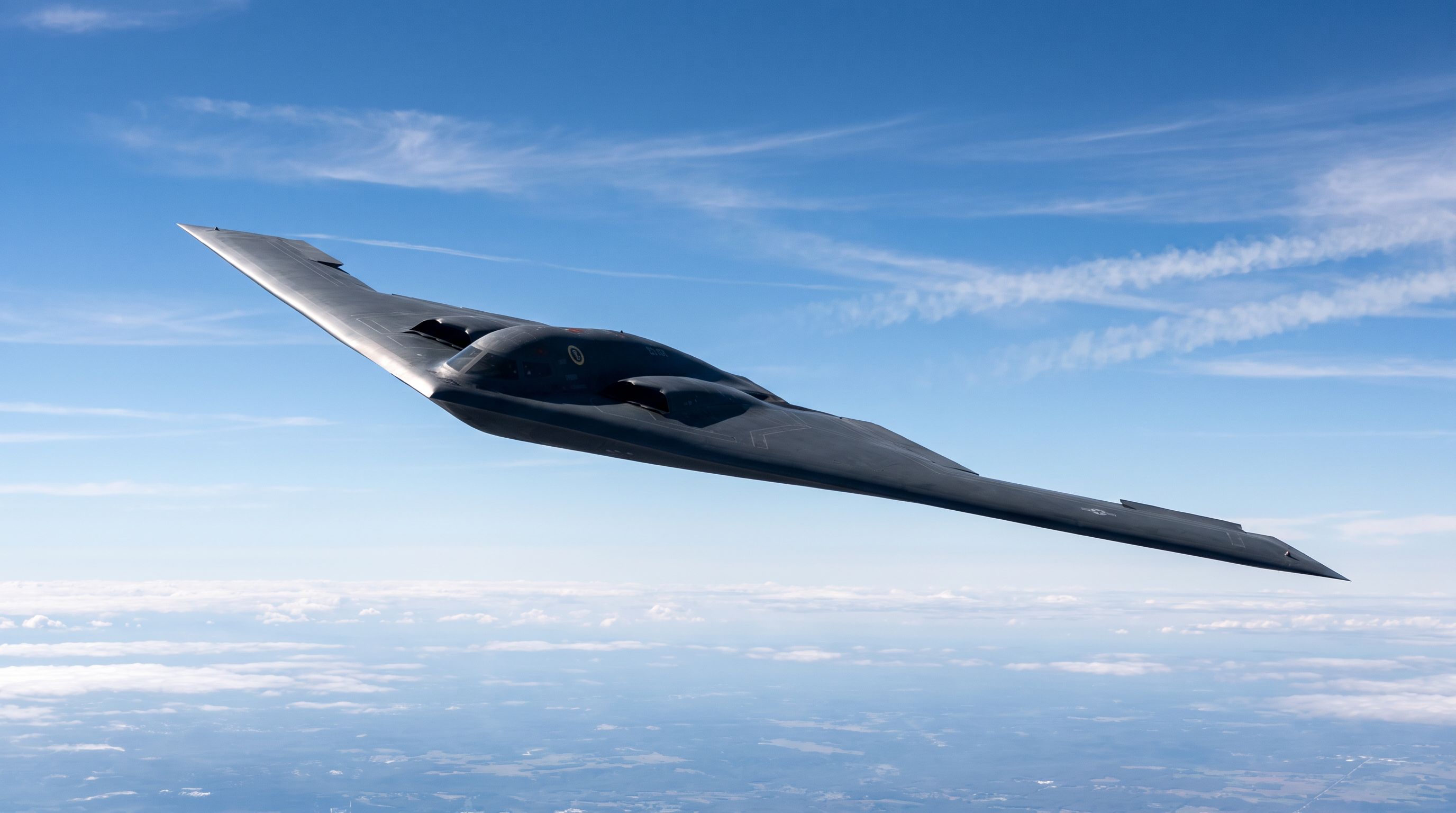
Five men were arrested in the village of Whelford — two miles from RAF Fairford — on September 27, after a local farmer spotted them with three vans engaged in what police called "suspicious" activity near the perimeter of the base that houses America's nuclear-capable bomber fleet in England. A week later, every single U.S. bomber stationed there was flown out.
The Pentagon confirmed that approximately a dozen B-1 bombers had been redeployed to home stations in the United States, with a defense official stating, "All U.S. bombers that were deployed to RAF Fairford have re-deployed to their home stations in the United States." The official added that "U.S. bombers routinely operate around the world to support global force readiness" — which is the kind of sentence you write when the real answer is classified.
British Prime Minister Andy Burnham was considerably less diplomatic. Speaking to the BBC Burnham said there are "strong indications that Iran played a part in what happened over the weekend at RAF Fairford, but of course it remains an ongoing, complex, and serious police investigation." Laurence Taylor, head of the UK's National Counter Terrorism Policing, confirmed that the suspects "remain under investigation as we explore multiple lines of enquiry."
RAF Fairford isn't some backwater landing strip. The base, which opened in 1944 and served as a launch point for Operation Iraqi Freedom in 2003, became the primary hub for U.S. bomber operations against Iran in February 2026. Former Prime Minister Keir Starmer authorized strikes on Iranian missile sites from the base in March 2026, after citing more than 20 Iranian-linked attacks in the preceding year. The B-1s, B-2s, and B-52s stationed there weren't parked for show. They were the planes that hit Iranian targets.
David Dunn, professor of international politics at the University of Birmingham, told TIME the withdrawal was "historic, unprecedented, and an indication of the sense of vulnerability" — and explained the mechanism behind the threat. "Iran — by doing things via proxies, organized criminal gangs, or hiring people through payments through the dark web — can still have a military effect," Dunn said. In other words, you don't need a missile to threaten a bomber base. You need five guys and three vans.
President Trump gave more details on why he decided to remove every B-2 bomber from the air base. He confirmed there was a specific threat and it came from Iran, or Iranian proxies against the base
Tehran, for its part, is shocked — shocked — at the accusation. The Iranian Embassy said it "categorically rejects and strongly condemns" the allegation. Foreign Minister Abbas Araghchi said Britain was "barking up the wrong tree." This from the regime whose Islamic Revolutionary Guard Corps has been linked to assassination plots, proxy wars across the Middle East, and attacks on international shipping in the Strait of Hormuz. The IRGC's track record of restraint is not, historically, its strongest selling point.
The pattern here is worth sitting with. We bombed Iranian missile sites from RAF Fairford. Months later, five men showed up at the perimeter with vans. A dual British-Iranian national was arrested days later in London. The British Prime Minister publicly pointed at Tehran. And the United States quietly pulled every bomber off the base.