
In February 2021, a merchant selling Trump merchandise lost their payment account at WePay, a JPMorgan Chase subsidiary. An employee wrote down the reason in plain English: "We closed their account due to violating our Wepay's Terms of Services (MAGA and Trump-related items are part of it)."
WePay's official explanation was that the products "promote hate, violence, or racial intolerance." The products were hats and T-shirts.
The merchant had been caught by an internal screening list. Its trigger words included "MAGA," "Make America Great," and "America First."
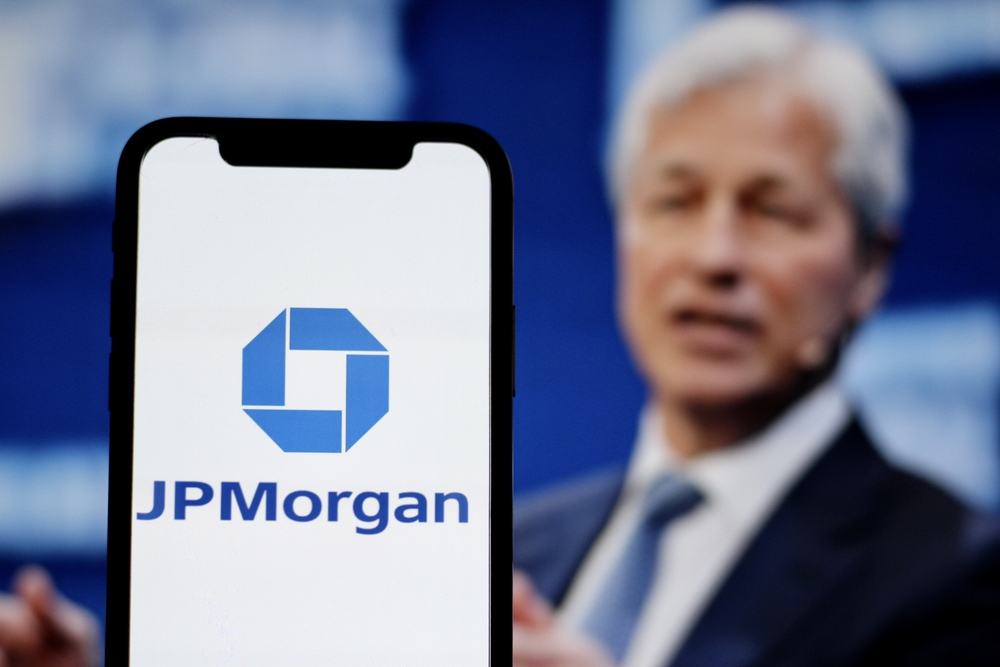
Around the same time, JPMorgan made a different call about a different customer. That wealthy client was facing drug and weapons charges, which ended in a criminal plea deal. JPMorgan kept the client, and federal regulators say the money the client could bring in appeared to influence the decision.
At America's largest bank, a weapons charge could be worked out, and a red hat couldn't.
Both cases come from a 47-page report released Wednesday by Comptroller of the Currency Jonathan V. Gould, titled "Guaranteeing Fair Banking for All Americans." It puts on paper what millions of conservatives suspected and couldn't prove.
Nine of the nation's largest banks kept policies between 2020 and September 2025 that restricted financial services based on customers' political beliefs, religious affiliations, or lawful business activities. They are JPMorgan Chase, Bank of America, Citibank, Wells Fargo, U.S. Bank, Capital One, PNC Bank, TD Bank, and BMO Bank.
"Today's report provides irrefutable evidence that the nation's largest banks have denied, debanked and discriminated against customers and lawful businesses," Gould said. Then he added a line that belongs over the door of every bank branch in America: "Fair access to financial services is not a mantra — it is a mandate."
The OCC reviewed nearly 100,000 complaints and about 420,000 pages of internal bank documents. It found that "reputation risk" had become the all-purpose excuse for cutting off anyone the banks found politically inconvenient.
The investigators found that WePay and JPMorgan had no formal written standards for deciding when flagged content counted as hate or violence. A keyword list did the deciding. It happened to include the sitting president's slogan and the name of a movement supported by tens of millions of Americans.
Christians got the same treatment. PNC turned down a line of credit for a successful media company after its ESG team noted that one owner's foundation "has funded several Christian conservative groups." One PNC employee wrote that it had become "really difficult to justify aligning ourselves" with the owners.
Wells Fargo pressured a payment processor to drop a religious nonprofit over its position on same-sex marriage. WePay closed an account raising money for a "devout Christian" challenging anti-discrimination laws in court. JPMorgan employees suggested ending a relationship with a nonprofit they called a "right wing religious conservative non profit with strong anti LGBTQ rhetoric."
Gun owners were next on the list. A Wells Fargo review warned that "under the Biden administration, banks could face greater supervisory pressure to move away from lending to the firearms industry." In 2024, Wells Fargo employees weighing a loan to a gun dealer called it a "controversial and highly partisan issue," and the bank said no.
Some banks went further and wrote their own gun laws. They conditioned financing on firearms businesses following bank-imposed rules, such as limits on magazine capacity and on sales to customers under 21. Congress never passed those rules. The banks enforced them anyway.
Entire industries were treated as untouchable: Arctic oil and gas, coal mining, firearms manufacturing and distribution, detention facilities, tobacco, and digital assets.
Then there's the Southern Poverty Law Center. Banks used SPLC "hate group" designations as grounds for flagging accounts. FBI Director Kash Patel has called the SPLC a "partisan smear machine." In April, a federal grand jury indicted it on 11 counts, including wire fraud and four counts of making false statements to a federally insured bank.
The pipeline ran from an activist group with an axe to grind, to a label, to a closed bank account. At no point did a judge, a prosecutor, or a jury get involved.
Senate Banking Committee Chairman Tim Scott said: "Debanking Americans over faith or politics is simply un-American." Representative Andy Barr of Kentucky added, "No law-abiding American should be debanked for their beliefs." Representative Dan Meuser of Pennsylvania said the report "exposes how far Biden-era debanking went to pressure banks."
President Trump started this. The investigation was ordered under his August 2025 executive order of the same name, "Guaranteeing Fair Banking for All Americans," which bars financial institutions from denying services over political or religious beliefs. The OCC opened its review in September 2025 and issued preliminary findings that December.
The rest of the Republican agenda moved alongside it. Scott's Financial Integrity and Regulation Management Act, the FIRM Act, would ban regulators from using "reputational risk" as a supervisory tool for good. The OCC and FDIC have already adopted a final rule removing it from bank examinations.
The banks told the OCC they've revised their policies, consolidated their guidelines, and made changes. The OCC found that some of them simply "rebranded the risk as a 'franchise' or 'brand' risk."
Gould's verdict on the banks' promises: "I am not confident that they will be enough." According to the report, "no bank has fully and publicly acknowledged its past debanking decisions."
JPMorgan says it has policies prohibiting political and religious discrimination. It called WePay "a small technology company we acquired years ago and have since wound down" that "did not meet our expectations," and added: "We identified it, corrected it, and the business no longer operates." It also blamed "years of regulatory second-guessing" for fostering a culture of caution.
That's the closest any of these banks has come to naming who was pushing them. The regulators doing the second-guessing worked for Joe Biden.
If a bank closed your account or turned you down during those years, you can file a complaint with the OCC at HelpWithMyBank.gov or by calling 800-613-6743.
Nine banks, 420,000 pages of evidence, and "MAGA" on a screening list. The report is titled "Guaranteeing Fair Banking for All Americans." Your readers already know who was left out of "all."