
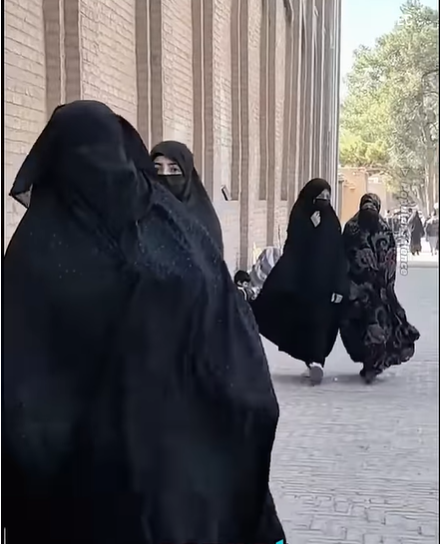
"In Italy, nobody, in the name of a real or supposed tradition, can decide that a young woman must hide herself." That was Italian Prime Minister Giorgia Meloni on Friday, announcing a ban on burkas and niqabs in Italian schools — and a new requirement that parents of foreign students with serious integration problems learn Italian.
The word she used was "basta." Enough.
Meloni's proposed measure does two things. First, it introduces an outright ban on face coverings in schools, targeting the burqa and niqab specifically. Second, it creates an obligation for parents of foreign students struggling with school integration to learn the Italian language. The message isn't subtle: if you're in Italy, you operate by Italian norms.
"Equality between men and women is not negotiable," Meloni said. "It is not negotiable on our streets and it is not negotiable in our schools."
That's the kind of sentence that gets a European politician dragged through international media for a week. Meloni said it anyway. She's been saying versions of it since she took office, and the polling numbers suggest Italians agree with her.
The broader context makes the announcement sharper. Meloni pointed to classrooms where Italian children have become outnumbered, calling the situation untenable. "It's unthinkable that in an Italian classroom, Italian children feel cornered because they've become the minority," she said. "It can't be done." That's a sitting head of state naming a demographic reality that most Western leaders won't touch with a ten-foot euphemism.
Meloni framed the policy squarely as a matter of gender equality — not xenophobia, not security theater, but the principle that no cultural tradition overrides the equal treatment of women. "We go to school with our faces uncovered, and in Italy, no one, in the name of a real or presumed tradition, can decide that a young woman must hide," she said. "Gender equality is non-negotiable."
The predictable objection is that this targets religious expression. Except Meloni didn't ban headscarves. She didn't ban religious jewelry. She banned full face coverings in educational settings — the same face coverings that multiple European courts have already ruled governments can restrict for security and social-cohesion reasons. The objection assumes that concealing a student's entire face is a protected religious act rather than a practice even many Muslim-majority countries regulate.
What makes Meloni's move land harder than the usual European integration debate is the second half of the policy. Requiring parents to learn Italian isn't a symbolic gesture. It's a practical mechanism that says integration is a two-way obligation. You don't get to send your child into an Italian school system while remaining deliberately outside of it yourself.
Meanwhile, school boards across America spent this month debating whether teachers should be required to use a student's preferred pronouns, whether library books depicting explicit content constitute age-appropriate material, and whether "patriot" is a loaded term in history class.
Meloni said "basta" and backed it with legislation. The Italian word translates to "enough." The policy translates to something American parents have been waiting to hear from their own leaders for years.
Italy's parliament still has to vote on it. But the Prime Minister of a G7 nation just stood at a microphone and said gender equality is non-negotiable — and meant the original definition.