

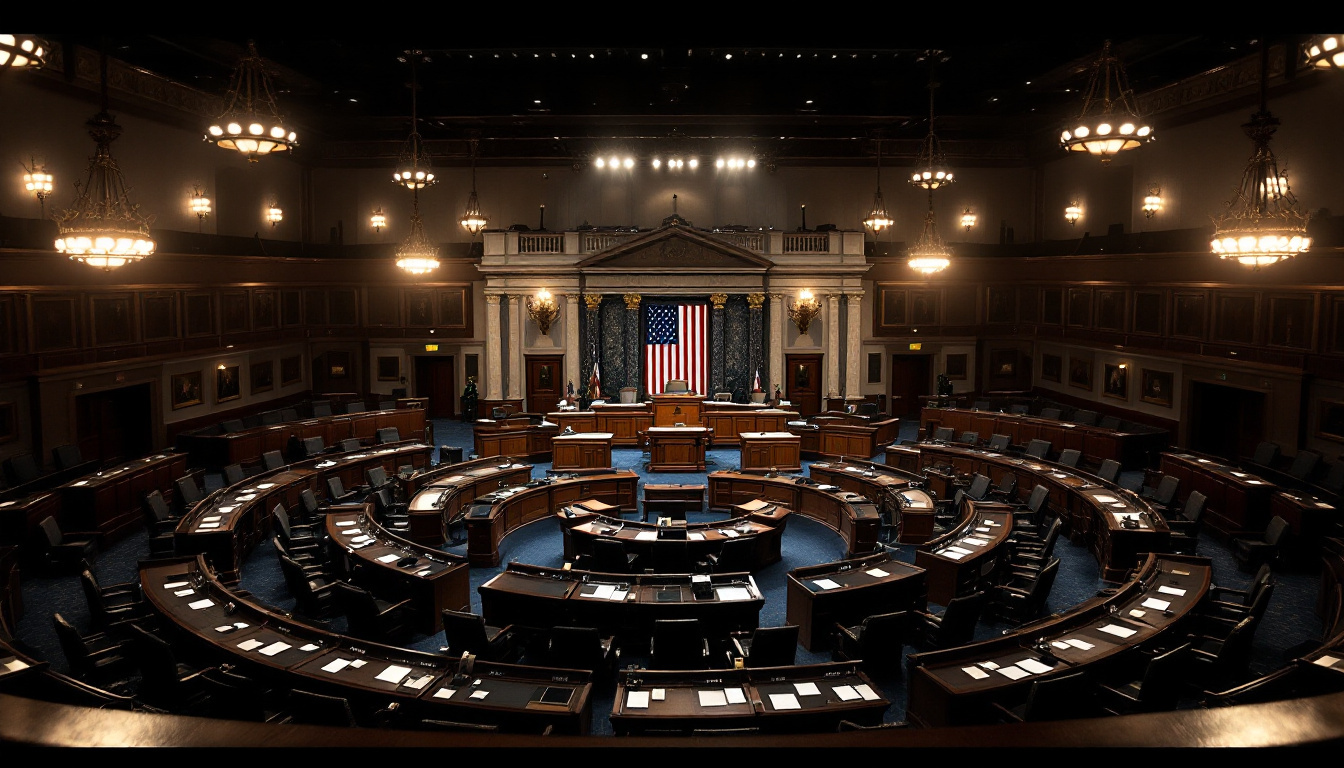
Republicans hold the Senate 53 to 47. In one cautious forecast for November 3, Democrats flip two Republican seats, North Carolina and Alaska, and Republicans take one back in Michigan.
That would still leave Republicans in charge, 52 to 48.
The forecast comes from economist Jim Rickards, who is credited with calling Trump's 2016 win when nearly every poll had Hillary Clinton ahead, and with nailing the exact 2024 Electoral College result, 312 to 226.
The forecast counts 35 Senate seats on the ballot this year, 13 of them truly competitive. Democrats are pouring money into nine Republican-held states: Texas, Maine, Ohio, North Carolina, Alaska, Kansas, Nebraska, Iowa, and South Carolina. In the forecast, they come away with two.
That might even be generous to Democrats. Polls underestimated Trump in 2016, and again in 2020. The forecast estimates this year's polls overstate Democrats by three to four points, since they lean toward Democratic-friendly voters and miss conservatives who won't pick up the phone. Correct for that, and Republicans don't lose ground at all. They hold at 53 to 47.
The 52-seat version also comes with a twist. It could work better for President Trump than the majority he has now.
Five of the Republican senators leaving after this year are the kind MAGA voters have been trying to replace for years: Mitch McConnell of Kentucky, John Cornyn of Texas, Joni Ernst of Iowa, Bill Cassidy of Louisiana, and Thom Tillis of North Carolina. Each one either lost a primary or decided to retire.
Look at who's lined up to take their places. In Texas, Ken Paxton, whom Trump called a "true MAGA warrior," beat Cornyn by 27 points. In Louisiana, Trump-backed Rep. Julia Letlow knocked Cassidy out of the primary and then won the runoff. In Kentucky, Trump-endorsed Rep. Andy Barr won the race for McConnell's seat in a landslide. In Iowa, Trump gave Rep. Ashley Hinson his "Complete and Total Endorsement" for Ernst's seat.
Even North Carolina, the seat the forecast has Democrats picking up, isn't much of a loss for Trump. Tillis voted against Trump's One Big Beautiful Bill last year, and Trump called him a RINO on his way out.
That's why a 52-seat majority could actually get along with Trump better than the 53 he has now.
The House may be closer than people think, too. Multiple forecasts calls it an extremely close race, with a real chance Republicans hold on, despite all the "blue wave" talk.
All the money hasn't changed much. Democrat billionaire Michael Bloomberg just wrote a last minute check for $80 million to help Democrats, mostly in House races.
Democrats need the help. Earlier this month, the committee in charge of electing Democratic senators borrowed $15 million from a bank to get through the final stretch, and it still spent more than it brought in. By contrast, the Republican National Committee has more than $128 million in the bank and no debt.
Then there's a shift that should worry Democrats more than any single race.
For decades, Democrats could count on roughly seven in ten Jewish votes. Now a new McLaughlin & Associates poll of 1,000 likely voters has Republicans leading Democrats by 31 points among Jewish voters on the congressional ballot, 64 percent to 33 percent. The pollsters caution that the Jewish group is small in a national survey, but it isn't the only sign.
In New York, CNN's Harry Enten found that the Democratic lead among Jewish voters on the House ballot has collapsed from 49 points in 2022 to 13 points now. Democrats are still ahead, but in Enten's words, these are "historically strong numbers for Republicans among Jewish voters."
The reasons aren't hard to find. Since Hamas attacked Israel on October 7, 2023, Jewish Americans have watched the Democratic Party's activist wing march with anti-Israel protesters, push boycotts, and shrug at harassment of Jewish students on campus. Reps. Rashida Tlaib and Ilhan Omar have championed the Boycott, Divestment, and Sanctions movement for years. In May, New York Mayor Zohran Mamdani became the first mayor in more than 60 years to skip the city's Israel Day Parade.
That brings us to Michigan, the seat the forecast has Republicans taking. Democrat Abdul El-Sayed is running for the seat Gary Peters is leaving open.
In March, a man drove a vehicle into Temple Israel in West Bloomfield, a synagogue with a preschool. El-Sayed condemned the attack, then added "hurt people hurt people," pointing to the attacker's family losses in Lebanon. Michigan's Democratic attorney general, Dana Nessel, accused him of making excuses for an attack that could have killed more than 100 preschoolers. In August, El-Sayed apologized to Jewish Democrats.
Republican Mike Rogers, who lost Michigan's 2024 Senate race by just 19,000 votes, is running again, this time against El-Sayed. In a race that close, even a small shift among Jewish voters could decide it.
Democrats used to treat the Jewish vote as a sure thing. If they can't anymore, they can't afford many close races.
In the cautious forecast, Republicans end up with 52 Senate seats, and a caucus more in line with Trump than the one he has now.