
Under Minnesota state law, a single registered voter can vouch for up to eight people at the polls — no ID required for any of them. All it takes is one person signing an affidavit saying they know the others live in the precinct.
James O'Keefe wanted to see how that worked in practice.
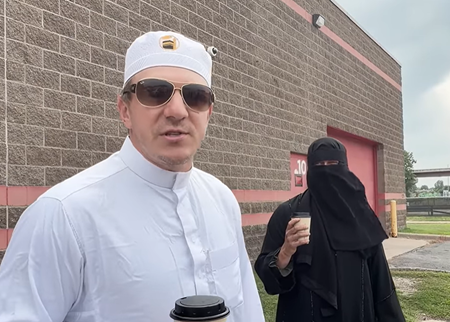
On August 11 — Minnesota Primary Day — O'Keefe and a team from OMG Media entered Minneapolis polling locations. He approached poll workers with a group dressed in traditional Muslim attire and speaking in exaggerated foreign accents, asking if his companions could vote. Poll workers confirmed they could, as long as O'Keefe vouched for them. Up to eight people. No identification needed from any of them.
No ballots were cast. The point was to document, on camera, exactly how Minnesota's vouching system operates when tested. Poll workers explained it step by step. The tape shows it working precisely as O'Keefe described.
He released the footage on August 17 and then did something almost more interesting than the video itself: he publicly challenged Minnesota media by name to cover it — "I'm your Huckleberry" — daring them to do their jobs.
So far, the response has been silence.
Here's O'Keefe's hidden camera footage from that day
Minnesota Secretary of State Steve Simon called the video "outrageous." His objection was to the costumes and the accents. He had considerably less to say about the underlying law O'Keefe's team documented — the one that allows a single registered voter to bring eight other people to the polls on Election Day, sign an affidavit on their behalf, and send them home with a ballot, no proof of identity required from anyone in the group.
Minnesota is not a random backdrop for this. The state uses same-day voter registration, and its vouching law — Minnesota Statutes § 201.061 — has drawn sustained scrutiny from election integrity advocates who argue it creates a vulnerability most other states have specifically closed. When O'Keefe says "blatant," he is not making a theoretical argument. He is standing in a Minneapolis polling location while a poll worker walks him through the system on camera.
The media pattern here is familiar. Footage surfaces showing something that contradicts the established narrative — in this case, the consensus that voter fraud is a myth, a conspiracy theory, a fever dream of people who watch too much cable news. The institutional response is to ignore it until it disappears, then cite the lack of coverage as proof it was never credible.
That circular logic — we didn't cover it, therefore it's not a real story, therefore we were right not to cover it — is how the press has handled election integrity questions for years. O'Keefe calling it out publicly breaks the loop. He is making the refusal to cover it part of the story.
We have been told for years that voter fraud doesn't exist in any meaningful way. Every time evidence surfaces, the standard shifts. Not widespread enough. Didn't change the outcome. The threshold for what counts keeps moving, and the people setting it are the same ones refusing to look at the tape.
The footage doesn't disappear just because the newsroom won't play it.