

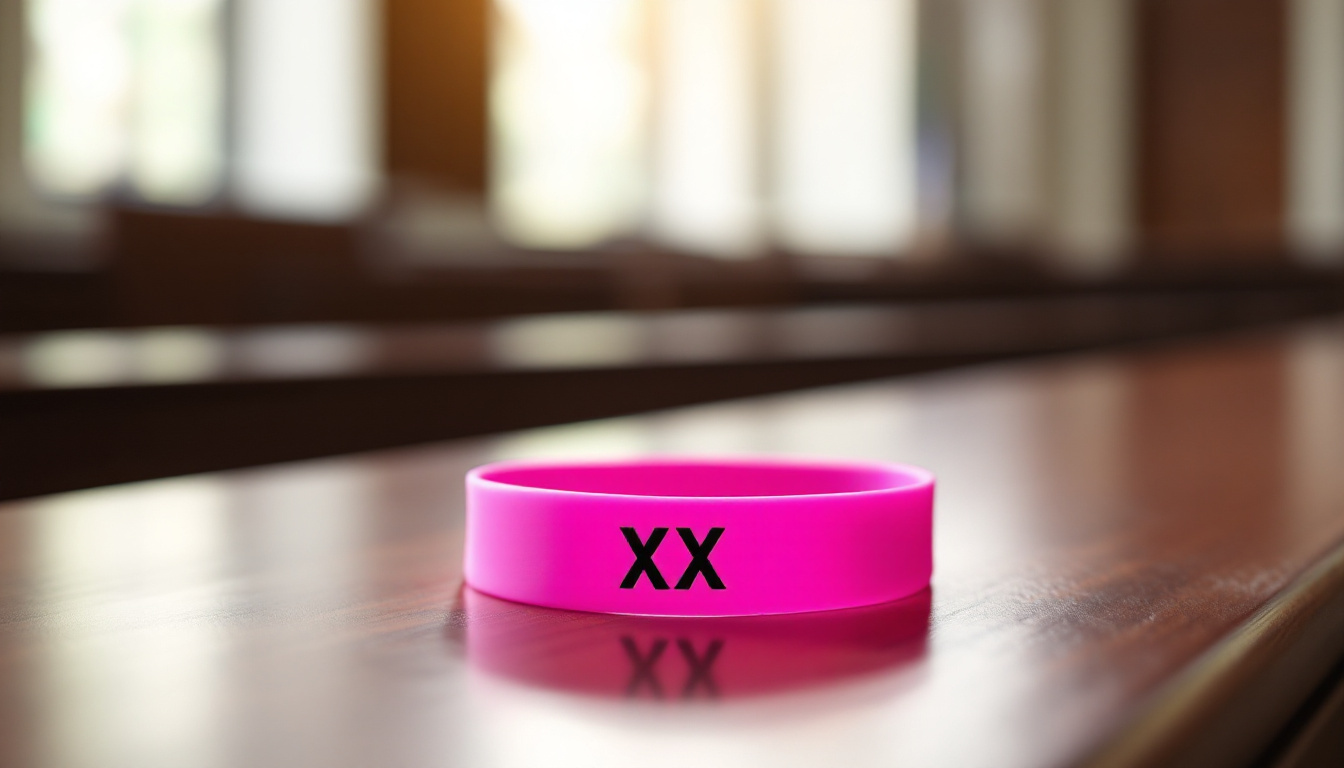
The pink wristbands said "XX." Two letters. The scientific notation for female chromosomes. Parents at Bow High School in New Hampshire wore them to a game where a biological male was competing on the girls' sports team.
The school called the police.
Bow School District Superintendent Marcy Kelley described the wristbands as "threatening, harassing, [and] intimidating." Bow High School Principal Matt Fisk called them "hateful" and "anti-trans." The district banned the wristbands from school property. Parents who had committed the offense of wearing a letter from the alphabet twice on their wrists were treated like they'd staged a threat.
The parents sued. The Institute for Free Speech took the case to federal court, arguing that two chromosomal letters on a wristband constituted protected speech under the First Amendment.
They lost the first round. U.S. District Court Judge Steven McAuliffe ruled that the wristbands "can reasonably be understood as directly assaulting those who identify as transgender women." A wristband. With two letters on it. Directly assaulting.
The First Circuit Court of Appeals saw it differently. In a unanimous ruling in late summer 2026, the appellate court reversed the decision and held that the wristbands were, in fact, protected free speech. The district's own lawyer had called the wristbands "poison" during oral arguments. The Institute for Free Speech attorney responded with six words that apparently needed a federal appeals court to confirm: "Your Honors, free speech is not poison."
The settlement came in November 2026. The Bow School District agreed to a declaratory judgment affirming the parents' First Amendment rights and wrote a check for $275,000 in attorney's fees and costs. Two years of litigation, one unanimous appellate reversal, and a quarter-million dollars — all because a school district decided that the letters on a human chromosome chart were a hate crime.
The progression is worth tracing. Parents showed up to a school sporting event. They wore wristbands referencing basic biology. The superintendent labeled it harassment. The principal labeled it hate. The school banned the expression. Law enforcement was summoned. A federal judge agreed the wristbands were an "assault." And then a unanimous appellate panel said every single one of those people was wrong.
Judge McAuliffe's original reasoning — that "XX" could be "reasonably understood" as a direct assault — tells you everything about where the Overton window had drifted. Stating that human females carry XX chromosomes, a fact printed in every biology textbook in the building, had been reclassified as aggression. The school didn't argue the science was wrong. They argued the science was mean.
The First Circuit didn't buy it. The unanimous reversal didn't hedge. It didn't carve out exceptions for school settings or suggest the parents could have found a gentler way to make their point. The court affirmed what used to be obvious: expressing a biological fact in a public setting is speech, and speech is protected.
The $275,000 is the number that matters going forward. School boards across the country have learned they can ban things, call the cops, and let the legal system sort it out later with no personal cost. This ruling attached a price tag. The Bow School District budget — funded by New Hampshire taxpayers — is now $275,000 lighter because administrators decided two letters of the alphabet were violence.
The College Fix, which first reported the settlement terms, noted the case took two full years from incident to resolution. Two years for a school district to learn that "XX" is not a weapon.
A wristband. Two letters. $275,000.