

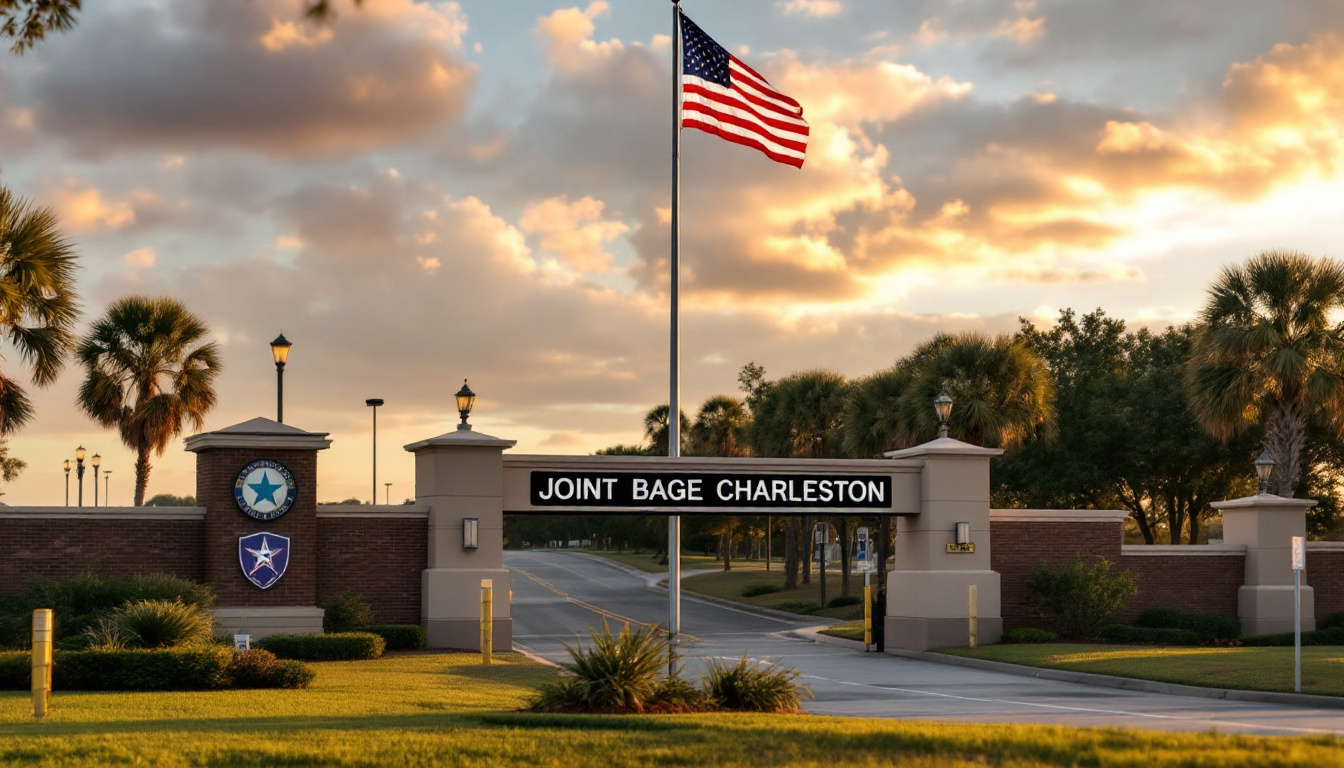
Joint Base Charleston, one of the largest military installations on the East Coast, is getting a new name. The Pentagon announced this week that the South Carolina base will be renamed in honor of the late Senator Lindsey Graham, who died unexpectedly earlier this month after more than two decades representing the state in the United States Senate.
Air Force Secretary Troy Meink made the announcement official, "Senator Graham's lifelong devotion to the military was shaped by his own military service and his public service in both the United States Senate and the United States House of Representatives," Meink said. "His steadfast advocacy was instrumental in modernizing our military infrastructure and enhancing aviation security, ensuring that Joint Base Charleston remains as one of America's premier military installations."
Graham entered the Senate in 2003, succeeding the legendary Strom Thurmond, and spent more than twenty years on the Armed Services Committee pushing for exactly the kind of military readiness that keeps installations like Charleston operating at full capacity. He wasn't a guy who just showed up for the photo ops at commissioning ceremonies. He fought for base funding when it wasn't popular, pushed for infrastructure modernization when the budget hawks wanted to cut, and put his name on legislation that kept South Carolina's military footprint growing while other states watched theirs shrink.
The base itself is no backwater outpost. Joint Base Charleston is a premier military installation that handles strategic airlift, global reach missions, and serves as a critical logistics hub for operations across multiple theaters. Renaming it after a senator who spent his career making sure it stayed funded and operational isn't symbolic. It's a direct line between the man's work and the facility that benefited from it.
Graham's sister, Senator Darline Graham, now holds his seat after being appointed to succeed him. She's running for the full term. South Carolina went from one Graham in the Senate to another, which tells you something about how that state feels about the family.
The timing of the Pentagon's decision — before the funeral, before the political dust has even begun to settle — speaks to something unusual in Washington. Most posthumous honors get tangled in committee negotiations and naming-rights squabbles for months. This one moved fast because the connection between Graham and Charleston wasn't a talking point. It was a twenty-three-year paper trail of appropriations votes, base realignment fights, and aviation security legislation.
Washington names things after politicians constantly. Most of the time it's a building nobody visits or a stretch of highway nobody notices. This one actually fits. The base exists in its current form in large part because of the man whose name will go on the gate.
That's not how honors usually work in this town. It's how they should.