
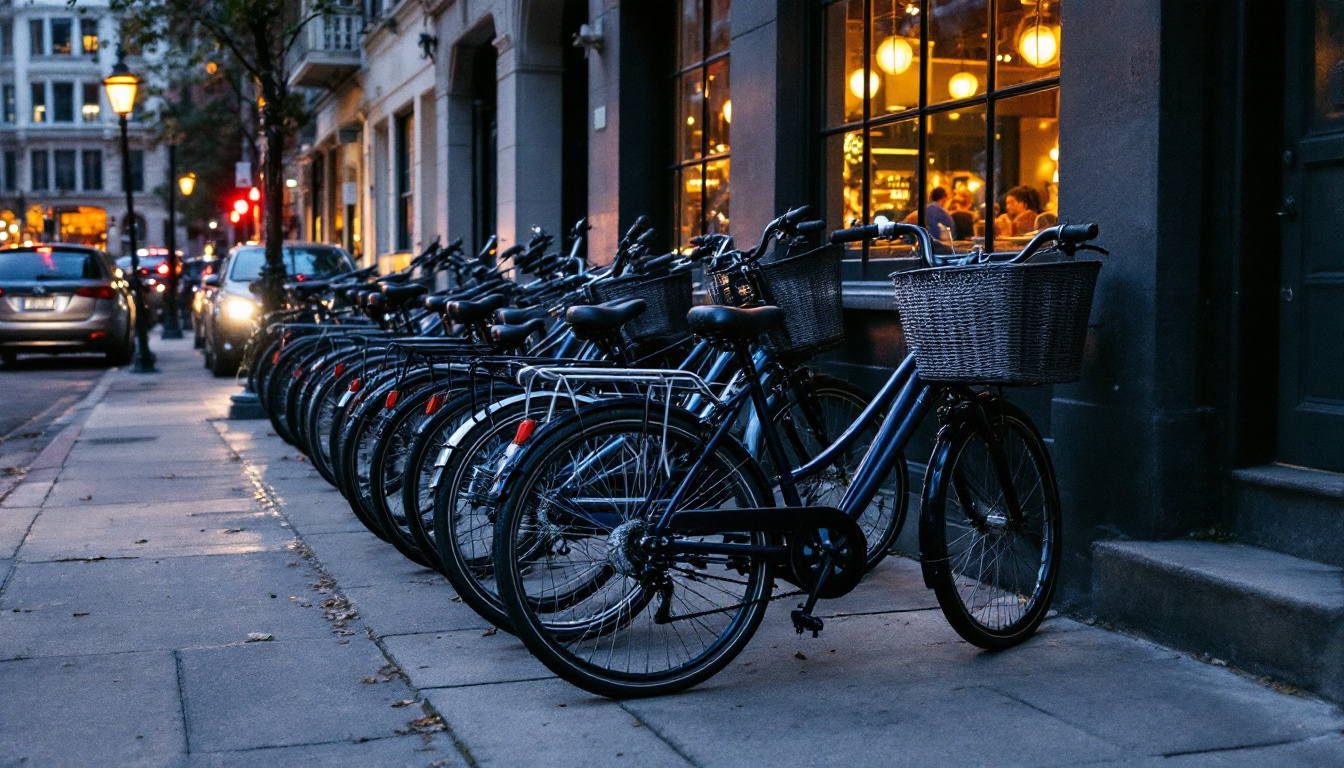
Yehuda Sichel, owner of Huda restaurant on 19th Street in Philadelphia, watched a stream of cyclists roll past his front door on Saturday — part of an organized boycott designed to punish his business for being "Zionist." Then he watched a much larger stream of customers walk through it.
The boycott was supposed to hurt. It didn't.
A pro-Palestinian group organized a bike ride through the Rittenhouse Square area targeting Jewish-owned restaurants — Huda, Mac Mart at 18th and Arch, and Schlesingers among them. The ride was scheduled, with either perfect obliviousness or perfect malice, on the eve of the 88th anniversary of Kristallnacht, the Nazi pogrom that destroyed Jewish businesses across Germany in 1938. The community noticed both the boycott and the date.
What happened next was predictable to everyone except, apparently, the organizers. Counter-protesters showed up. Israel supporters lined the route. And the targeted restaurants saw foot traffic they hadn't seen in weeks. Marti Lieberman, owner of Mac Mart, posted a simple message before the ride: "Catch us this Sunday, we will be open." Customers took her up on it.
According to Anti-Defamation League data, Pennsylvania recorded 465 antisemitic incidents in 2024 — an 18% increase over 2023. Philadelphia alone accounted for 189 of those incidents. Montgomery County added another 51. The bike ride boycott wasn't an isolated stunt. It was the latest entry in a trend line that keeps climbing.
Reggie Jackson — the baseball legend, Mr. October, born in Wyncote just outside Philly — weighed in publicly. "It is heartbreaking to see antisemitism in my hometown," Jackson said. Then he added what a lot of people were thinking: "What the hell? We have to speak up."
Sichel was more direct about what the boycott represented for business owners in the city. "We should not be allowing in our city for businesses, public businesses to be harassed," he said. He's not wrong, but he's also describing a city government that has spent years treating progressive protesters as a protected class regardless of who they target.
The organizers framed the ride as peaceful economic activism. Economic activism that singles out businesses by the ethnic and religious identity of their owners has a name, and it isn't "peaceful." It's the same logic that put yellow stars on storefronts — just rebranded with bike helmets and a route map.
A 2025 survey found that 79% of Jewish Americans are concerned about antisemitism, and 52% worry about their personal safety because of their identity. Those numbers aren't abstract in Philadelphia. They're the reason Sichel has to think about whether putting his name on a restaurant makes him a target.
The Streisand Effect is reliable. Try to suppress something and you amplify it. Try to boycott a restaurant and you fill its tables. The cyclists pedaled through Rittenhouse Square convinced they were making a statement.
They were. Just not the one they intended.