

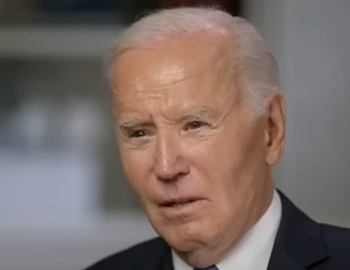
Seventy hours. That's how much recorded conversation exists of former President Joe Biden casually handing classified information to a ghostwriter named Mark Zwonitzer, a private citizen with no security clearance, no need-to-know, and no business hearing any of it. The recordings and full transcripts have now been released.
The book advance alone was $8 million.
Former Assistant Attorney General Jeffrey Clark, now serving as VP of Litigation at the Oversight Project, started reviewing the tapes and immediately flagged what the rest of us are thinking. "The tapes make clear that Biden disclosed massive amounts of classified information to his ghost writer Mark Zwonitzer," Clark said. He added: "Our team is reviewing the Biden tapes now. We will be out with various bombshells."
The conversations between Biden and Zwonitzer took place across 2016 and 2017, all in service of Biden's memoir "Promise Me, Dad." The setup was simple — Biden sat down with his ghostwriter and apparently treated classified national security information like cocktail party gossip. For a book deal. For money.
Special Counsel Robert Hur investigated this. He found Biden had willfully retained and disclosed classified materials. And then he recommended no charges, famously citing Biden's diminished mental state as the reason a jury wouldn't convict. The "elderly man with a poor memory" line that launched a thousand memes.
Clark pointed to a specific statute that makes the whole no-prosecution decision even harder to swallow. "Now, take a look at 18 USC 798(d)," Clark wrote, asking "why didn't Special Counsel Robert Hur seek a prosecution and then (A) the forfeiture the $8 million book advance... and (B) his Delaware house?"
That's the part that deserves a second look. Under 18 USC 798(d), the government can seize property used in or derived from the unauthorized disclosure of classified information. Biden disclosed classified material to write a book. The book generated an $8 million advance. The classified documents were stored at his Delaware home. Both the money and the house were legally on the table for forfeiture — and Hur left them right where they sat.
We spent years watching a special counsel investigation into a former president over documents at Mar-a-Lago. Raids. Grand juries. Espionage Act charges. Meanwhile Biden was on tape — seventy hours of tape — doing the same thing, except he was doing it on purpose, to a civilian, for profit. One got the full weight of federal law enforcement. The other got a report that called him too old to stand trial and a quiet retirement.
The Oversight Project, according to Clark and The Gateway Pundit, is now combing through the full tranche of recordings and transcripts. Clark's promise of "various bombshells" suggests the 70 hours contain more than just one or two careless slips. This was an extended, repeated pattern across months of recorded sessions.
The "poor memory" defense was always a trapdoor. If Biden was too cognitively impaired to be prosecuted, he was too cognitively impaired to serve as president — and yet he stayed in office for another year after Hur's report dropped. If he was competent enough to serve, he was competent enough to face a jury.
Either way, the $8 million didn't have dementia. The Delaware house didn't forget where it was. The statute didn't care about Biden's mental state — it cared about the classified material and the proceeds derived from disclosing it. Hur had the tool. He just didn't pick it up.