

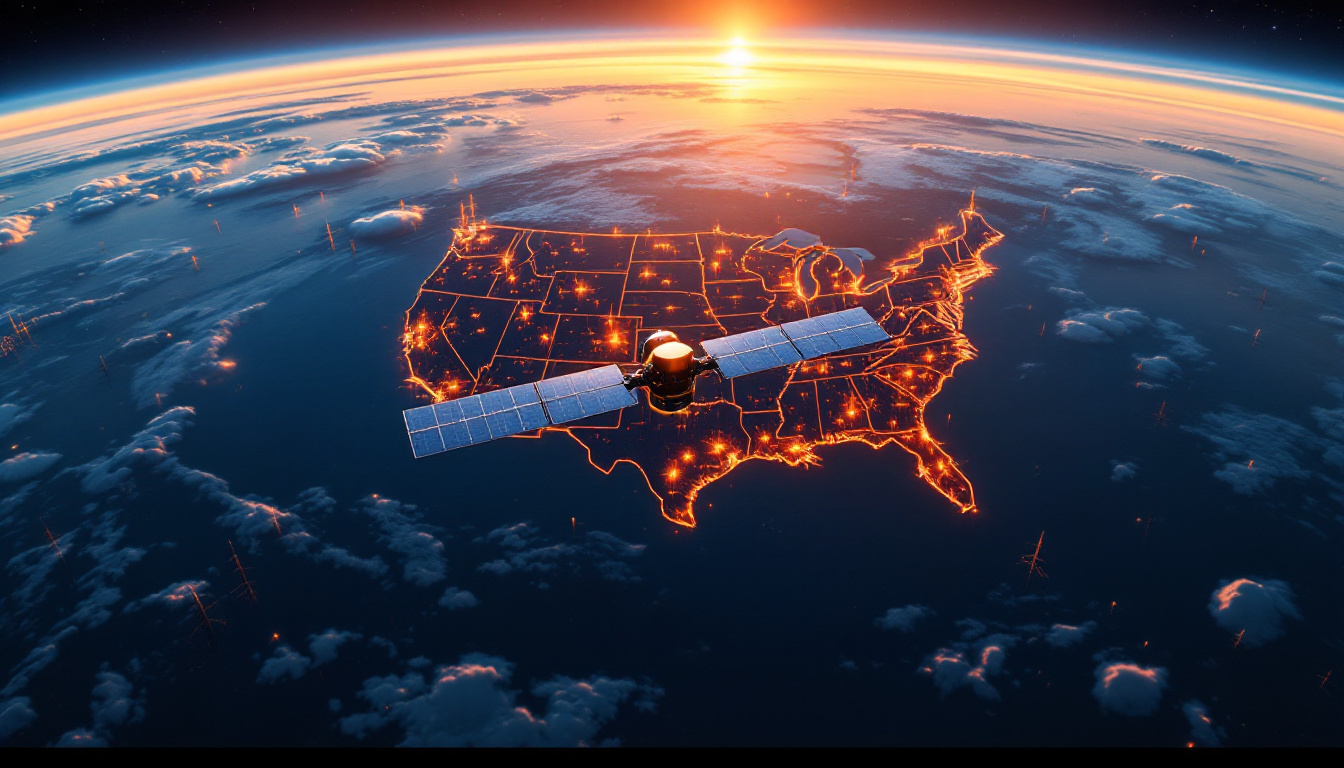
Fourteen megahertz of paired spectrum in the 800 MHz band. That's what SpaceX just acquired for nationwide U.S. deployment — the low-band frequencies that pass through walls, blanket rural dead zones, and form the backbone of every major cellular network in the country.
AT&T, Verizon, and T-Mobile stocks crashed over 7% on the news.
The play is called Starlink Mobile, and it combines something no carrier has ever had: a 15,000-satellite constellation capable of direct-to-device service, paired with terrestrial spectrum that lets it work indoors. SpaceX's V2 satellites are designed to deliver more than 100 times the bandwidth of the current Starlink generation. That's not an incremental improvement over what AT&T offers in Tulsa. That's a different product category.
The FCC filing lays out the architecture — satellite-to-mobile service using 2 GHz mid-band spectrum globally, the newly acquired 800 MHz band domestically, and Ka, V, E, and W frequencies for satellite backhaul on V3 hardware. The company is awaiting final FCC approval for spectrum deployment, which in regulatory terms means the lawyers are doing paperwork while the engineers are already building.
What makes this different from every other "disruptor" that's come for the wireless industry is that Elon Musk already has the infrastructure in orbit. Starlink's satellite constellation exists. The direct-to-device technology exists. The 800 MHz acquisition isn't a business plan on a PowerPoint slide — it's the last piece of a system that's already operational in dozens of countries.
The telecom incumbents have spent two decades consolidating the wireless market into three companies that charge Americans roughly the same prices for roughly the same service in roughly the same coverage areas. Competition, in the way economists actually mean the word, hasn't existed in U.S. wireless since the Obama administration. The carriers compete on ad campaigns and phone trade-in deals, not on whether you can make a call from your cabin in Montana.
SpaceX isn't entering that market. It's replacing the premise the market runs on.
Traditional carriers need towers. Towers need permits, land leases, utility connections, maintenance crews, and years of local regulatory negotiation before a single bar of signal reaches a new area. SpaceX needs a satellite that's already up there and a phone that's already in your pocket. The cost structure isn't comparable. The coverage model isn't comparable. The scaling math isn't comparable.
That 7% stock drop wasn't panic. It waseli recognition. Wall Street looked at 14 megahertz of 800 MHz spectrum in SpaceX's hands and understood what it means for companies whose entire business model depends on being the only option.
The usual objection is regulatory. The FCC has historically protected incumbent carriers from exactly this kind of disruption, and the telecom lobby remains one of the most powerful in Washington. But SpaceX has already secured direct-to-device authorization. The Gen2 constellation of 15,000 satellites has FCC approval. The spectrum purchase is a commercial transaction, not a regulatory ask. The pieces that needed government permission already have it.
The wireless industry in America has operated like a utility with retail pricing — essential service, limited providers, no real incentive to expand coverage or lower costs. Every few years a new company announces it will change that. Most of them needed to build networks from scratch and burned through investor cash before laying a single mile of fiber.
SpaceX built its network to connect the planet to the internet. The phone company is a side effect.
AT&T's market cap lost billions in a single trading session over 14 megahertz of spectrum. That's not what happens when investors see a competitor. That's what happens when they see an extinction event.