

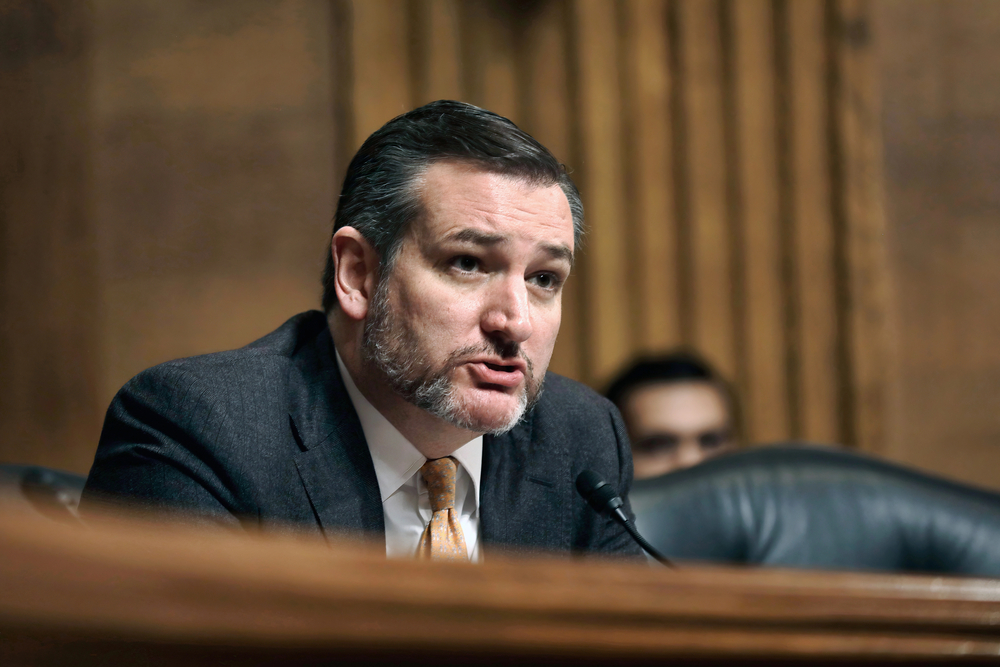
Sen. Ted Cruz went on Dan Patrick's podcast Wednesday and said five words that will rearrange every 2028 conversation in Washington: "It's no secret that I want to be president."
Not "I'm thinking about it." Not "we'll see what happens." He wants to be president.
The Texas Republican didn't stop there. When Patrick pressed him on whether 2028 is the year, Cruz offered the political equivalent of a slow grin: "Time will tell." Then he went further, describing the presidential ambition as "a bug that history has proved is rarely ended. It is a permanent and often fatal bug."
Self-aware, at least. The man ran for the Republican nomination in 2016 and clearly never recovered. But what makes this interesting isn't the ambition — it's the timing. Vice President JD Vance hasn't even formally signaled his own 2028 intentions yet, and Cruz is already carving out space in the lane.
On Monday, Cruz told Ali Vitali on MS NOW that there would be no coronation. "Oh, no — there is going to be a full discussion about who we are and what we believe," he said. "I'll certainly be part of the discussion." That's not a guy testing the waters. That's a guy who already bought the swimsuit.
The emerging 2028 field is shaping up to be the deepest Republican bench in a generation. Secretary of State Marco Rubio is building a foreign policy resume that practically writes its own campaign bio. Florida Governor Ron DeSantis never fully went away. And now Cruz is planting his flag on what he frames as an ideological debate — voter ID, economic policy, the direction of the party after Trump.
Critics will say Cruz is delusional for challenging a sitting vice president for the nomination. That's the same crowd that said Trump was delusional in 2015. The Republican primary process isn't a line at the DMV. Nobody gets the nomination because it's "their turn." If the base wanted a coronation, they'd register as Democrats.
What Cruz is actually doing is smart. He's framing 2028 not as a personality contest but as a policy debate — who are we and what do we believe after Trump leaves office? That's a question the party has to answer regardless. Cruz is just making sure he's the one asking it.
And there's a practical reality here: the midterm elections will likely play a role in Vance's timeline and decision-making. Which means the field stays open longer than usual. Which means early movers like Cruz get to define the terms of the conversation before anyone else shows up.
The 2028 Republican primary might end up being the most competitive in modern history. Multiple governors, a secretary of state, a vice president, and a senator who's been running for president in his head since 2016.
Worse problems to have than too many people who want the job.