
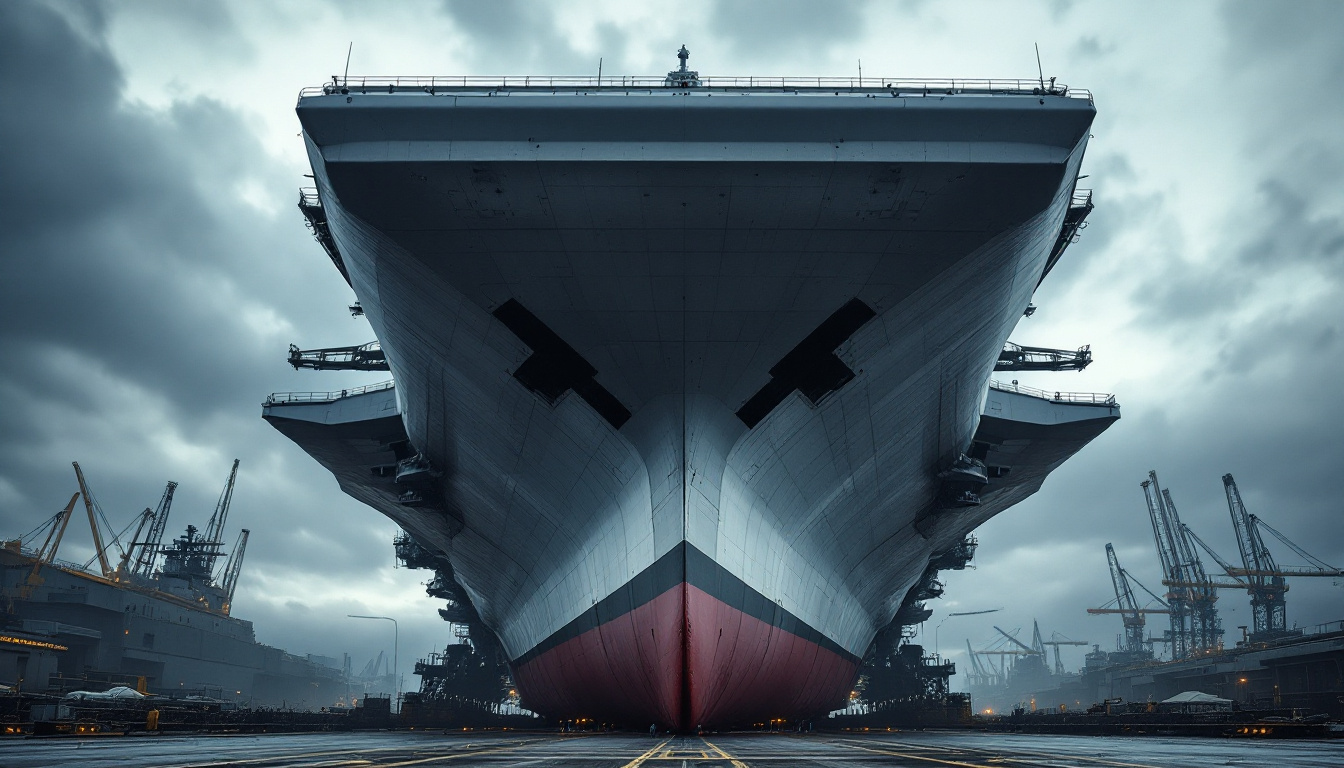
The USS Doris Miller — CVN-81 — is a Gerald R. Ford-class aircraft carrier named after a man who manned a machine gun at Pearl Harbor on December 7, 1941, with zero training, while his ship was under Japanese attack. He was a Mess Attendant 3rd Class on the USS West Virginia. He was the first Black American to receive the Navy Cross.
The Navy is reportedly considering taking his name off the ship.
According to sources, the service is reviewing the naming of the carrier, which was formally christened at a ceremony at Pearl Harbor in January 2020. Acting Secretary of the Navy Thomas Modly made the announcement himself, saying at the time, "In selecting this name, we honor the contributions of all our enlisted ranks, past and present." That was four years ago. Apparently the honor has an expiration date.
Doris Miller was born on October 12, 1919, in Waco, Texas. He joined the Navy in 1939. When the Japanese attacked Pearl Harbor, Miller carried wounded sailors to safety, then grabbed an unmanned .50-caliber Browning anti-aircraft machine gun — a weapon he'd never been trained on — and started firing. He was twenty-two years old. He died in November 1943 when the USS Liscome Bay was sunk by a Japanese torpedo. He was twenty-four.
This isn't some obscure historical footnote. The Navy already named a Knox-class frigate the USS Miller in 1973, which served until 1991. CVN-81 was supposed to be the bigger, permanent tribute — a supercarrier bearing the name of an enlisted hero for the first time. More than 80 years after Miller gave his life, the brass apparently wants to revisit that decision.
When asked about the report, the Navy's Office of Information said it had "nothing to share at this time." Which is the military-bureaucratic version of not denying it.
Defense Secretary Hegseth hasn't publicly commented on the carrier naming review. Rep. Massie has flagged the issue. But the broader question isn't whether one congressman raises an objection — it's how a Pentagon that can't meet recruiting targets has the institutional bandwidth to consider renaming a ship named after a combat hero.
The military has spent the last several years wondering why young Americans aren't lining up to serve. Maybe — and this is just a thought — stripping a Pearl Harbor hero's name off a warship while recruitment numbers crater sends exactly the wrong message. Every potential recruit watching this story learns the same lesson: your service has a shelf life, and headquarters might erase you when the political winds shift.
The carriers named after Gerald R. Ford, George H.W. Bush, and Ronald Reagan aren't under review. Presidents get permanent naming rights, apparently. Enlisted men who bled at Pearl Harbor get an asterisk.
Doris Miller picked up a weapon he'd never trained on, in the middle of the worst attack on American soil in a generation, and fought until they pulled him away. He died on a different ship two years later, still fighting the same war.
The Navy called that worthy of a supercarrier in 2020. What changed isn't the history.