

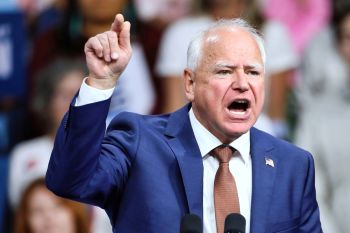
Tou Lue Vang, a Laotian national, pleaded guilty to first-degree sexual conduct after raping a 10-year-old girl. He avoided prison through a plea deal. And on June 10, the Minnesota Board of Pardons — a three-person panel that includes Governor Tim Walz — granted him a full pardon.
One week before ICE was set to deport him.
Vang was convicted back in 2005. The original charges included strongarm sodomy and procuring a child for prostitution. The plea deal knocked the charges down to first-degree sexual conduct, which was already a gift from the justice system that most people would have the decency to accept quietly and disappear with. Instead, the pardon now allows Vang to contest his removal proceedings in immigration court — meaning he may stay in the country indefinitely.
The Department of Homeland Security didn't mince words. DHS blasted the decision publicly, calling it indefensible. And they're right, because try defending it. Try standing behind a podium and explaining to the American public why a former vice presidential nominee just granted clemency to a convicted child predator who's also an illegal immigrant scheduled for deportation.
The Minnesota Board of Pardons operates with just three members. That means Walz didn't get outvoted. He didn't get steamrolled by some bureaucratic process. He sat on that board and signed off on this. The New York Times reported the pardon, and Townhall's Scott McClallen broke down the implications — this wasn't some procedural technicality buried in a stack of paperwork. It was a deliberate act by a sitting governor who, less than two years ago, was asking the country to make him vice president.
The timing alone tells the story. Vang's deportation was imminent. ICE had the case ready to go. The pardon didn't just forgive his crime — it handed him a legal tool to fight removal. Without the pardon, he's on a plane. With it, he's in immigration court with a clean record and a lawyer.
Defenders of the pardon process will argue that clemency exists for a reason, that people serve their time and deserve a second chance. Fine. But Vang didn't serve time. He got a plea deal that kept him out of prison on charges involving the rape of a child. The "second chance" argument assumes a first consequence actually landed. It didn't.
This is the same Tim Walz who ran on a platform of protecting kids. The same governor who signed executive orders on child safety. The same candidate who told debate audiences that compassion and decency were the cornerstones of his public service. And when a Laotian national convicted of raping a 10-year-old girl needed one more break from the system, Walz was right there to give it to him — seven days before the country was finally going to send him home.
Compassion is a word that does a lot of heavy lifting in politics. In Minnesota, apparently it lifts convicted child predators right over the deportation line.