

The federal government spends $4.04 billion a year on homelessness through a program called "Continuum of Care." A three-judge panel of the Boston-based 1st U.S. Circuit Court of Appeals just ruled Tuesday that the Trump administration can redirect $1.3 billion of that money away from permanent housing subsidies and toward transitional housing and supportive services.
The people who've been cashing those checks for decades are not taking it well.
HUD had moved to restructure how Continuum of Care grants are awarded, setting aside the $1.3 billion specifically for transitional housing and service-based programs — the kind that actually move people off the street instead of warehousing them indefinitely. A Rhode Island federal judge blocked the move earlier this year, siding with plaintiffs who argued the shift would "put tens of thousands of formerly homeless people at risk of losing their housing."
The 1st Circuit disagreed. The three-judge panel found the administration was likely to succeed on appeal, ruling that HUD's decision to restructure the $1.3 billion set-aside was not subject to notice-and-comment requirements. The court also noted that "HUD would suffer irreparable injury absent a stay, given that HUD only has until December 1, 2026 to make awards to applicants for Continuum of Care funds."
Translation: the clock is ticking, and blocking HUD from restructuring would effectively kill the reform by running out the calendar. The court wasn't having it.
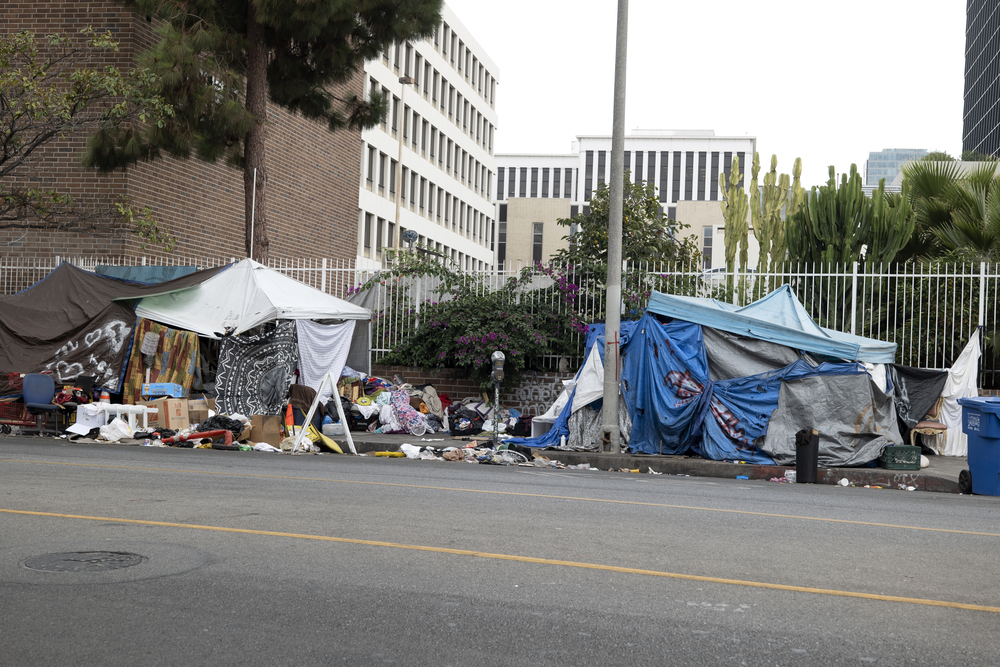
The ruling hands President Trump a significant policy win on an issue that has devoured billions in federal spending with remarkably little to show for it. The Continuum of Care model has operated essentially unchanged for years, funneling money to the same networks of nonprofits and housing authorities while tent cities metastasize from Los Angeles to Portland to Philadelphia.
The plaintiffs claim shifting $1.3 billion toward transitional services would devastate permanent housing programs. But permanent housing programs have been the centerpiece of federal homelessness strategy for over a decade. The national homeless population hasn't shrunk. In many cities, it's exploded. The policy these groups are fighting to preserve is the policy that produced the crisis they claim to be solving.
What HUD is proposing isn't radical. Transitional housing — shelters with services attached, substance abuse treatment, job training, mental health support — used to be the backbone of homelessness intervention before the "Housing First" orthodoxy took over. Housing First says give people a permanent apartment with no preconditions and the rest will follow. For some, it works. For the chronic street population driven by addiction and untreated mental illness, it's been an expensive way to ignore the actual problem.
The December 1 deadline the court referenced matters. If HUD can't restructure the grant competition by then, the money flows through the same channels to the same organizations running the same programs. Another year, another $4 billion, another point-in-time count showing the same results.
The 1st Circuit just made sure that doesn't happen by default.