

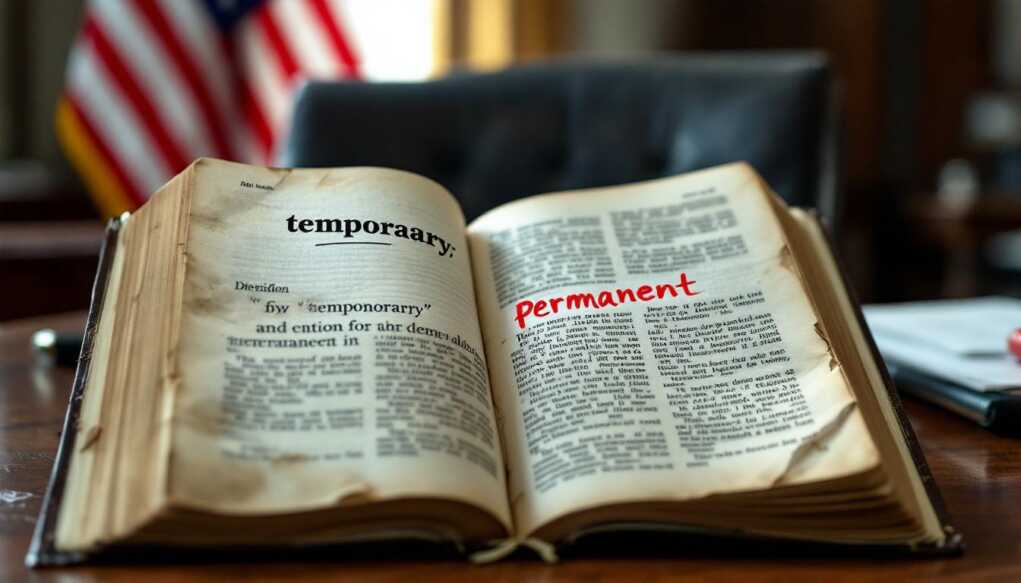
Six House Republicans just crossed the aisle to vote for extending Temporary Protected Status for Haitian migrants. The word “temporary” has been attached to this program for sixteen years now. Someone please buy these people a dictionary.
Sixteen years! Most Americans can’t get a “temporary” parking pass renewed for more than an hour without getting a ticket, but Haitian migrants have been riding the world’s longest “temporary” visa since before the first iPhone had copy-and-paste. Classic.
Temporary Protected Status — or TPS, because the government loves acronyms almost as much as it loves spending your money — was originally designed as emergency relief. Haiti has an earthquake, a hurricane, a crisis. America says, “Okay, you can stay here until things calm down.” That was 2010. The earthquake was sixteen years ago. At what point does “temporary” become “permanently enrolled in American social services”?
The answer, apparently, is never — as long as six Republicans keep voting with Democrats to extend it.
The Freedom Caucus went ballistic after the vote, and they’re right to be furious. They’ve been pushing to end TPS for Haitians entirely, calling it exactly what it is: a permanent amnesty loophole disguised as humanitarian relief. Every time the expiration date approaches, the same song and dance happens. Democrats cry about “sending people back to danger,” a handful of squishy Republicans cave, and the “temporary” clock resets for another couple of years.
Rinse. Repeat. For sixteen years.
We need to name names here because these six Republicans earned it. They voted with Democrats. They voted against the Freedom Caucus. They voted to keep a sixteen-year-old “temporary” program alive when their own party’s voters are screaming for immigration enforcement. If your representative is on this list, you might want to give their office a call and ask them what “temporary” means in their household. Does their “temporary” diet last sixteen years too?
(We’re guessing it does, based on some of the photos we’ve seen from the House cafeteria.)
Here’s what drives us crazy about TPS. It was never designed to be a second immigration system. It was supposed to be a short-term humanitarian pause — a few months, maybe a year — while a country recovered from a specific disaster. But the bureaucracy figured out that if you never officially declare the “emergency” over, the program never expires. Haiti had an earthquake in 2010. Then there were political problems. Then there was another hurricane. Then COVID. There’s always something. And every “something” becomes a reason to extend TPS for another eighteen months.
At some point, we have to ask the obvious question: if Haiti has been in a continuous state of emergency for sixteen straight years, is TPS actually helping? Or is it just a conveyor belt that moves people from “temporary guest” to “permanent resident” without anyone ever having to vote on actual immigration reform?
The Freedom Caucus knows the answer. That’s why they’re pushing to kill the program entirely. And they’re right. Sixteen years of “temporary” isn’t temporary — it’s a policy choice that nobody had the guts to make through the front door, so they kept sneaking it through the back.
The six Republicans who voted for this extension need to answer one simple question at their next town hall: how many more years does “temporary” last? Twenty? Thirty? Do the Haitian migrants’ grandchildren eventually age out, or do they get TPS too?
Because right now, the only thing “temporary” about Temporary Protected Status is the attention span of the Republicans who keep voting to extend it.
President Trump has been clear about where he stands on immigration enforcement. The Freedom Caucus has been clear. The voters who sent these representatives to Washington have been crystal clear. And yet six Republicans decided that sixteen years of “temporary” wasn’t quite long enough.
The next time one of these six faces a primary challenger, we hope someone puts the word “TEMPORARY” on a billboard with a sixteen-year countdown clock next to it. Maybe then they’ll finally understand what the rest of us figured out a decade ago — there’s nothing temporary about TPS except the political courage of the Republicans who refuse to end it.